Skip to content


Have you ever set a massive goal, felt fired up for a couple of weeks, and then somehow ended up right back where you started?
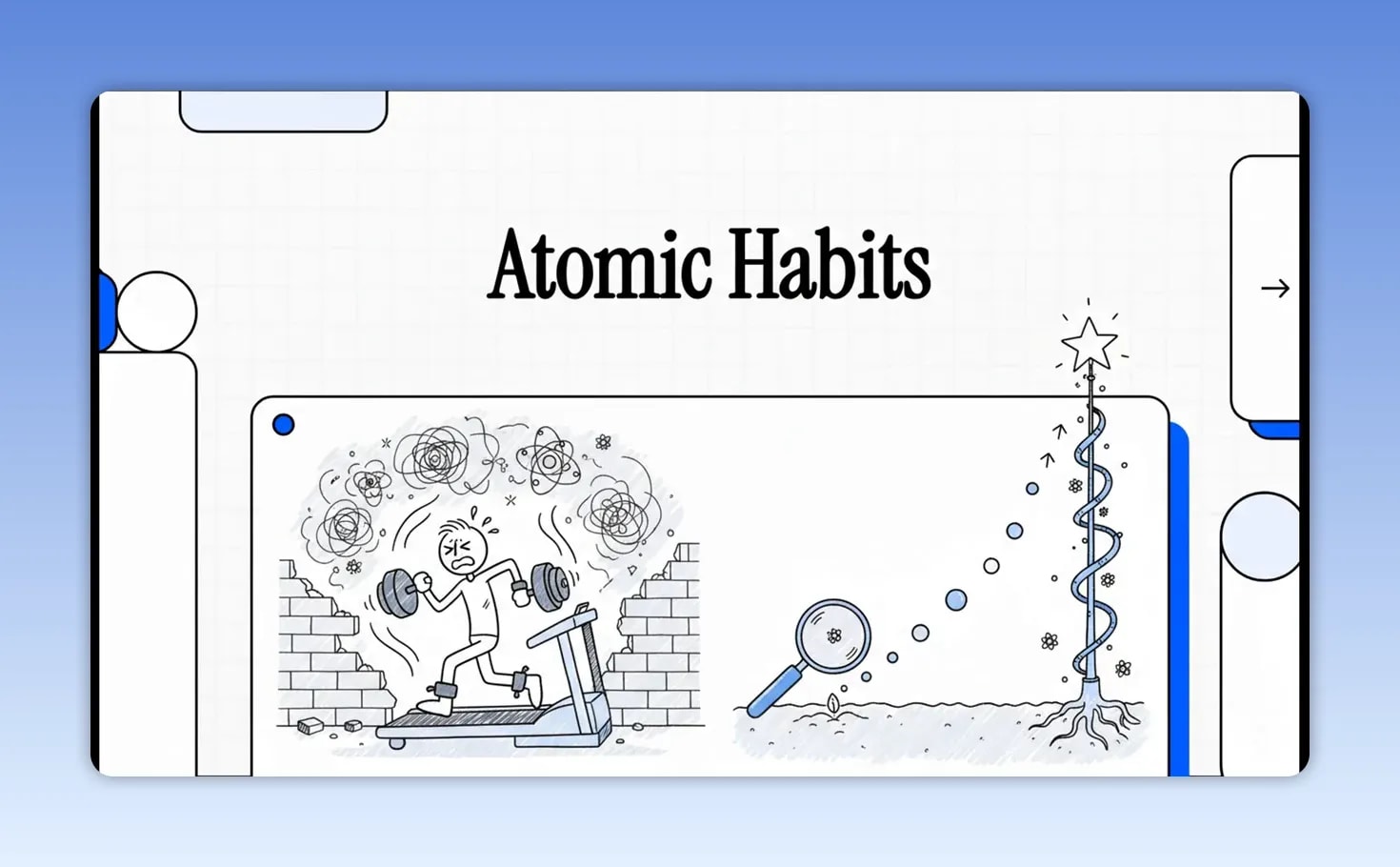
That pattern is frustrating, but it does not usually mean you are lazy or unmotivated. More often, it means you are relying on the wrong strategy. The big idea behind Atomic Habits by James Clear is simple: real transformation rarely comes from huge dramatic moves. It comes from tiny repeated actions that compound over time.
Your results in health, money, work, and relationships are not mainly a reflection of the goals you have written down. They are a reflection of the habits you have already built. Goals point you in a direction. Systems carry you there.
That is what makes this framework so powerful. It replaces the all-or-nothing mindset with something far more practical: get a little better, a little more consistent, and a little more intentional every day.
Why small habits matter more than big goals
We are taught to think big. Bigger goals, bigger dreams, bigger breakthroughs. But the uncomfortable truth is that a goal by itself does not change your life.
Two people can share the exact same goal and end up with completely different results. Why? Because the outcome depends on the habits underneath it. If your daily routine does not support the result you want, the goal stays a wish.
This is why Clear’s approach feels so refreshing. Instead of obsessing over the finish line, he focuses on the repeated behaviours that create the finish line.
- If you want to get fit, your workouts and food choices matter more than the idea of “getting in shape.”
- If you want to improve your finances, your spending and saving habits matter more than vague money goals.
- If you want to create something meaningful, the habit of showing up matters more than waiting for a burst of inspiration.
In other words, success is less about one grand decision and more about what you do when today looks ordinary.
The turning point that shaped the philosophy
This idea did not come from abstract theory. It was shaped by a brutal personal setback.
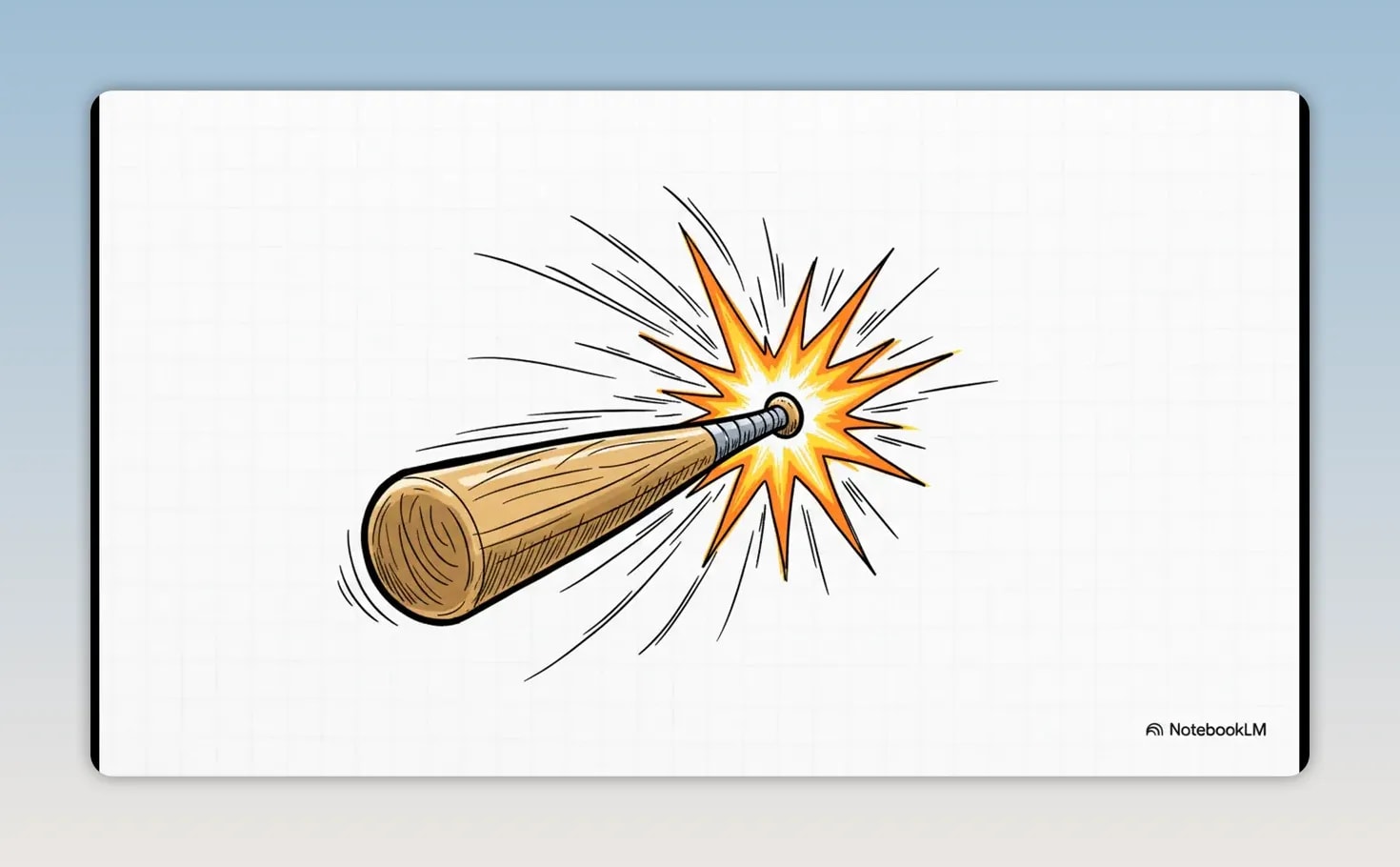
As a teenager, James Clear suffered a devastating baseball accident when a bat struck him in the face during practice. The injury was severe, involving major trauma, skull fractures, and months of recovery. At one point, even basic physical coordination had to be rebuilt.
What makes that story stick is not just the injury itself. It is what came after. A year later, he was cut from the varsity baseball team. That kind of moment can easily make someone feel as if everything has collapsed.
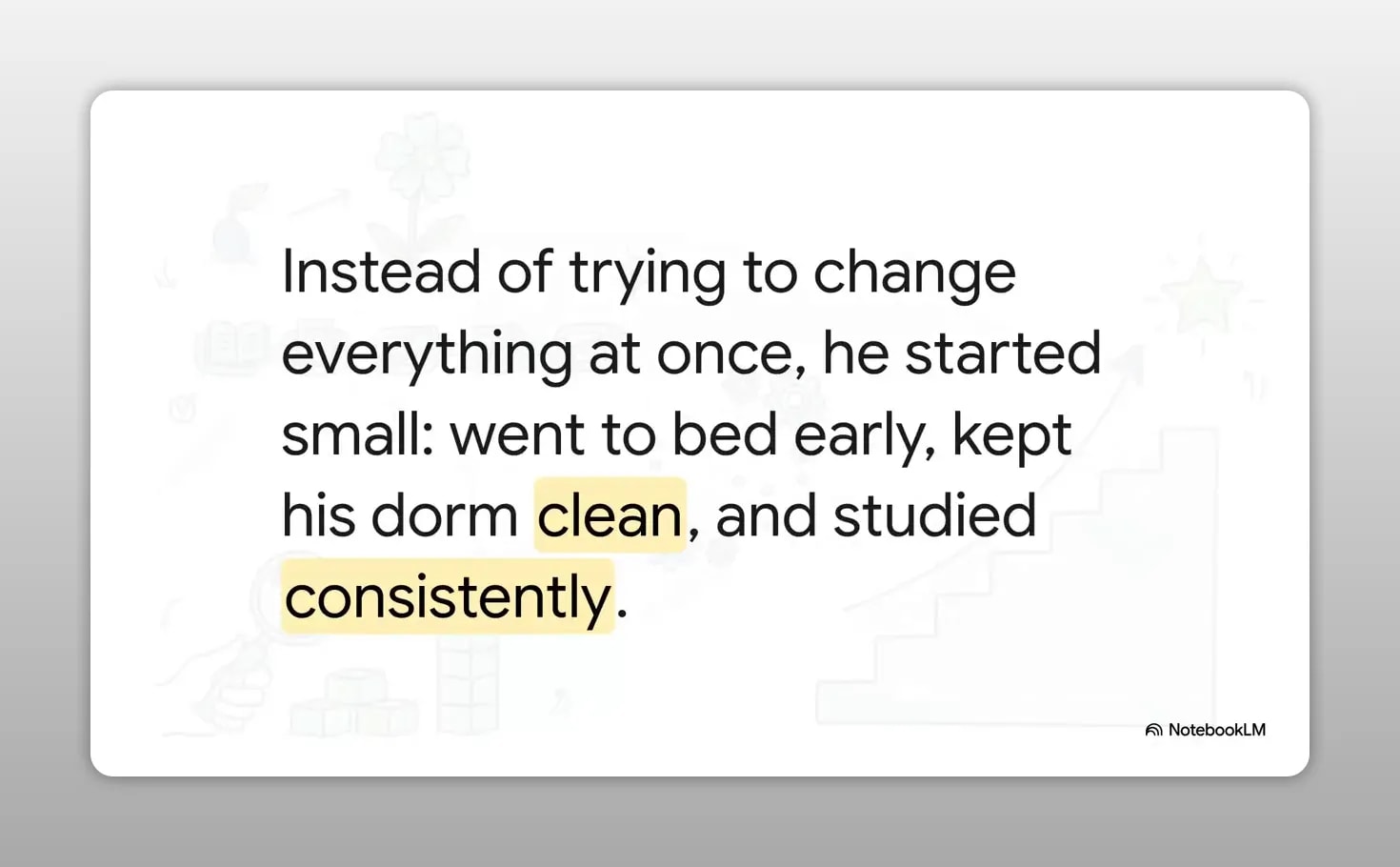
Instead of trying to force one giant comeback, he took a different route. When he got to college, he started with tiny actions that looked almost too small to matter. He kept his room clean. He went to bed earlier. He stayed consistent with basic routines.
Those habits were not glamorous. They were not dramatic. But they created structure, and structure created momentum.
That is the heartbeat of the whole method. When life feels broken, tiny wins are not trivial. They are often the most reliable way back.
The 1% rule and the power of compounding
One of the most memorable ideas in Atomic Habits is the 1% rule.
The question is this: what happens if, instead of trying to become amazing overnight, you focus on becoming just 1% better each day?
The numbers make the point beautifully. Small improvements seem invisible in the moment, but repeated over time they multiply. If you drift a little lower every day, the decline adds up. If you improve a little every day, the growth stacks on itself.
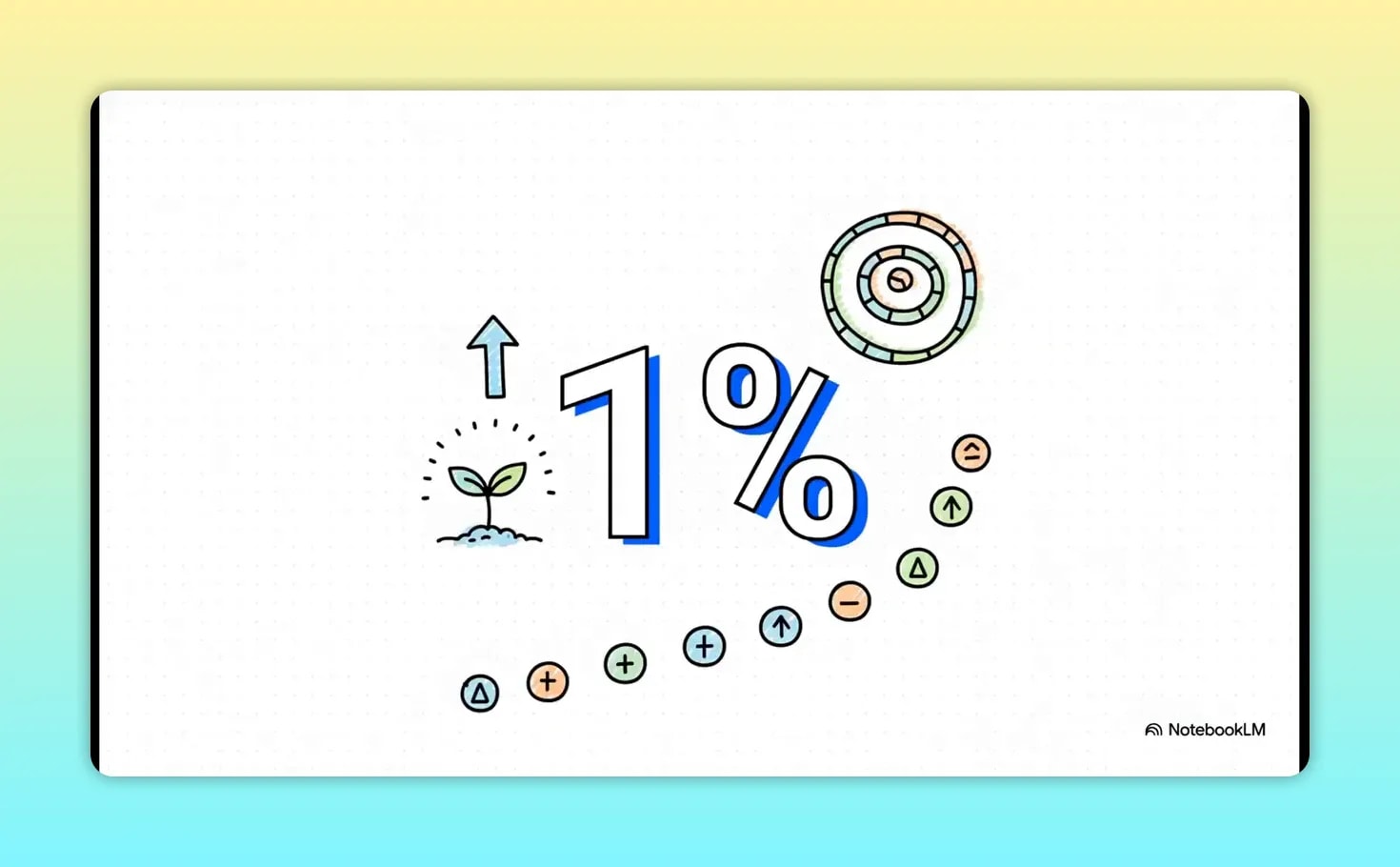
That is why habits behave a lot like compound interest. At the start, there is almost nothing to show for your effort. Day one looks ordinary. Day ten still looks ordinary. Even day thirty can feel underwhelming.
Then, gradually, the curve bends.
What once felt pointless starts producing visible results. Strength builds. Savings accumulate. skills sharpen. Confidence grows. The payoff arrives later than most people expect, which is exactly why so many people quit too early.
The lesson is simple but hard to live out: do not judge a habit only by what it gives you this week. Judge it by where it will place you in a year.
Do You Want to Learn How To Earn an Additional Income?
Start Owning Your Life
The habit loop that drives behaviour
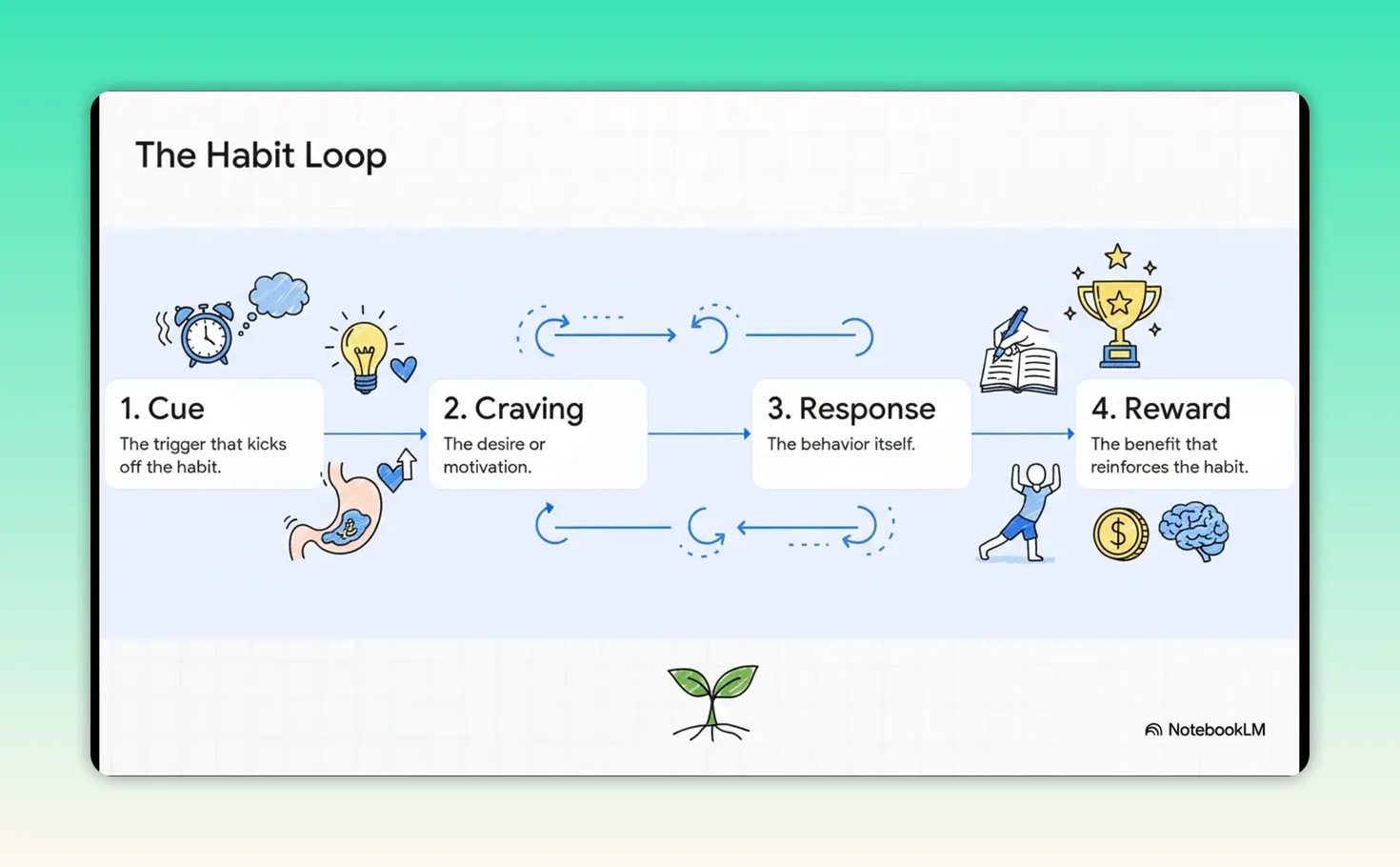
To build better habits, it helps to understand how habits actually work. Clear breaks behaviour into a simple four-step loop:
- Cue: something triggers the behaviour.
- Craving: you begin to want a change in state.
- Response: you act.
- Reward: you get some benefit, and the brain remembers it.
That loop explains a lot. You do not randomly reach for your phone, snack, skip the gym, or sit down to work. Something prompts the action. Then a desire appears. Then comes the behaviour. Then your brain decides whether it is worth repeating.
Once you see that loop, habits stop feeling mysterious. They become easier to design on purpose.
The four laws of behaviour change
Here is where Atomic Habits becomes deeply practical. Clear turns the habit loop into four clear rules for building good habits.
1. Make it obvious
If a habit stays out of sight, it often stays out of mind.
Good habits become easier when the cue is visible and hard to ignore. If you want to read more, leave a book where you naturally sit. If you want to take vitamins, place them beside something you use every morning. If you want to practise guitar, keep it out of the case and in the room.
This is also where habit stacking can help. Tie a new habit to one you already do consistently. For example:
- After making coffee, I will write one sentence.
- After brushing my teeth, I will stretch for one minute.
- After sitting at my desk, I will review my top task.
The cue becomes built into your environment and routine.
2. Make it attractive
We are far more likely to repeat behaviours that feel appealing.
This does not mean every good habit has to be thrilling. It means you should connect the habit to something rewarding in your mind. Remind yourself what it gives you, not just what it costs you.
Going for a walk is not merely exercise. It can be stress relief, clarity, energy, and a better mood. Cooking at home is not just discipline. It can be independence, health, and money saved.
The more attractive the meaning, the easier the action becomes.
3. Make it easy
This one is huge. Most people fail not because they choose the wrong habit, but because they make the starting point too difficult.
If you want a habit to stick, lower the friction.
- Want to exercise? Start with five minutes.
- Want to write? Open the document and draft a paragraph.
- Want to meditate? Sit down for sixty seconds.
The goal is not to impress yourself on day one. The goal is to make showing up so easy that skipping feels harder than doing it.
This lines up with what behaviour researchers often call reducing friction. If a positive action is simple to begin, consistency becomes far more likely. For extra context on how environment shapes behaviour, Behavioural Scientist has useful evidence-based articles on the topic.
4. Make it satisfying
Habits that feel good are habits the brain wants to repeat.
Many worthwhile habits have delayed rewards. Exercise pays off later. Saving money pays off later. Studying pays off later. That delay can make consistency harder, so it helps to add some immediate sense of completion.
That could be as simple as tracking the habit, ticking a box, or acknowledging that you kept a promise to yourself today. The action may be small, but the satisfaction teaches your brain that this behaviour is worth keeping.
How to break bad habits by reversing the laws
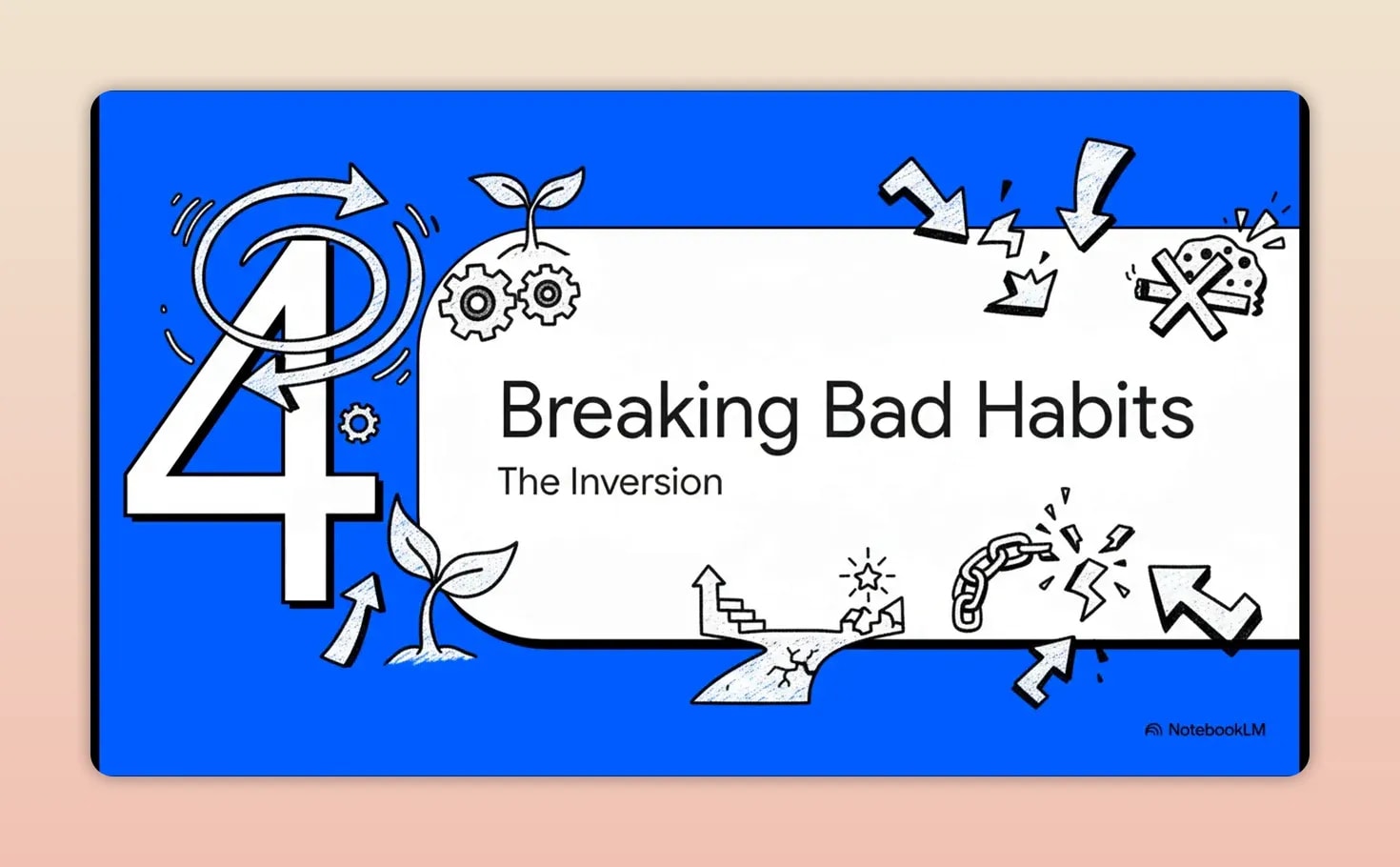
The brilliant part of this system is that it works both ways. The same framework that helps build good habits can also dismantle bad ones.
To break a bad habit, reverse the four laws:
- Make it invisible
- Make it unattractive
- Make it difficult
- Make it unsatisfying
Take late-night phone scrolling as an example.
If you want to stop doing it, do not rely on willpower alone. Change the setup.
- Make it invisible by charging your phone in another room.
- Make it unattractive by reminding yourself that it wrecks your sleep and focus.
- Make it difficult by deleting the apps that pull you in most.
- Make it unsatisfying by noticing how bad you feel the next day when you ignore your plan.
That is a very different approach from simply saying, “I should stop.” It is specific. It is mechanical. It gives you levers to pull.
The deepest shift: stop chasing outcomes and build identity
This is where the message gets really powerful. Habit change is not only about productivity. It is about identity.
Most people start with outcome-based goals. They want to write a book, run a marathon, lose weight, save money, or build a business. There is nothing wrong with those aims, but they are incomplete.
The stronger question is: who do I need to become?
Not “I want to write a book,” but “I want to become a writer.”
Not “I want to run a marathon,” but “I want to become a runner.”
Not “I want to eat better,” but “I want to become a healthy person.”
That distinction matters because outcomes are temporary. Identity is ongoing. Once you start acting in line with the person you want to be, habits stop feeling like punishment and start feeling like proof.
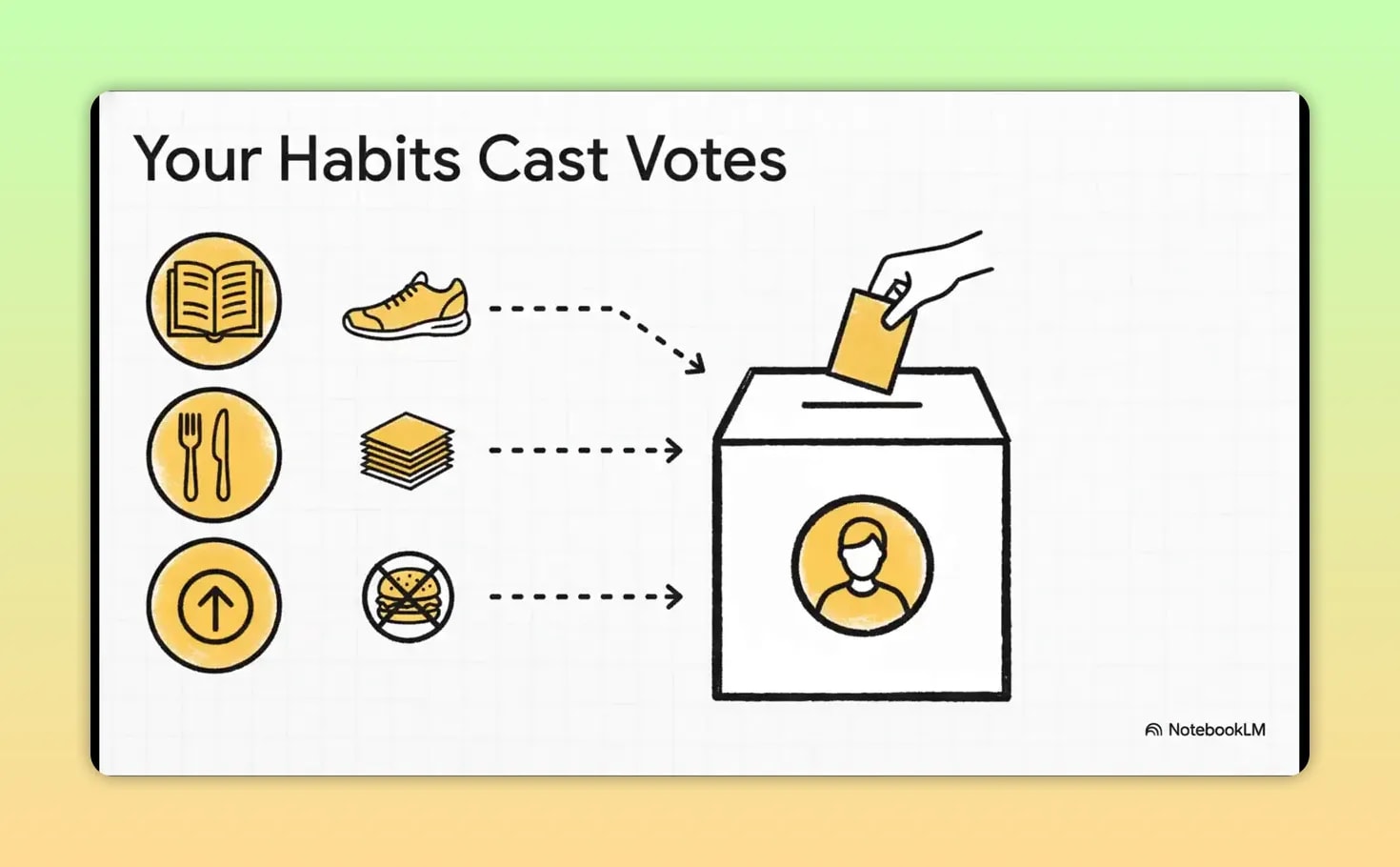
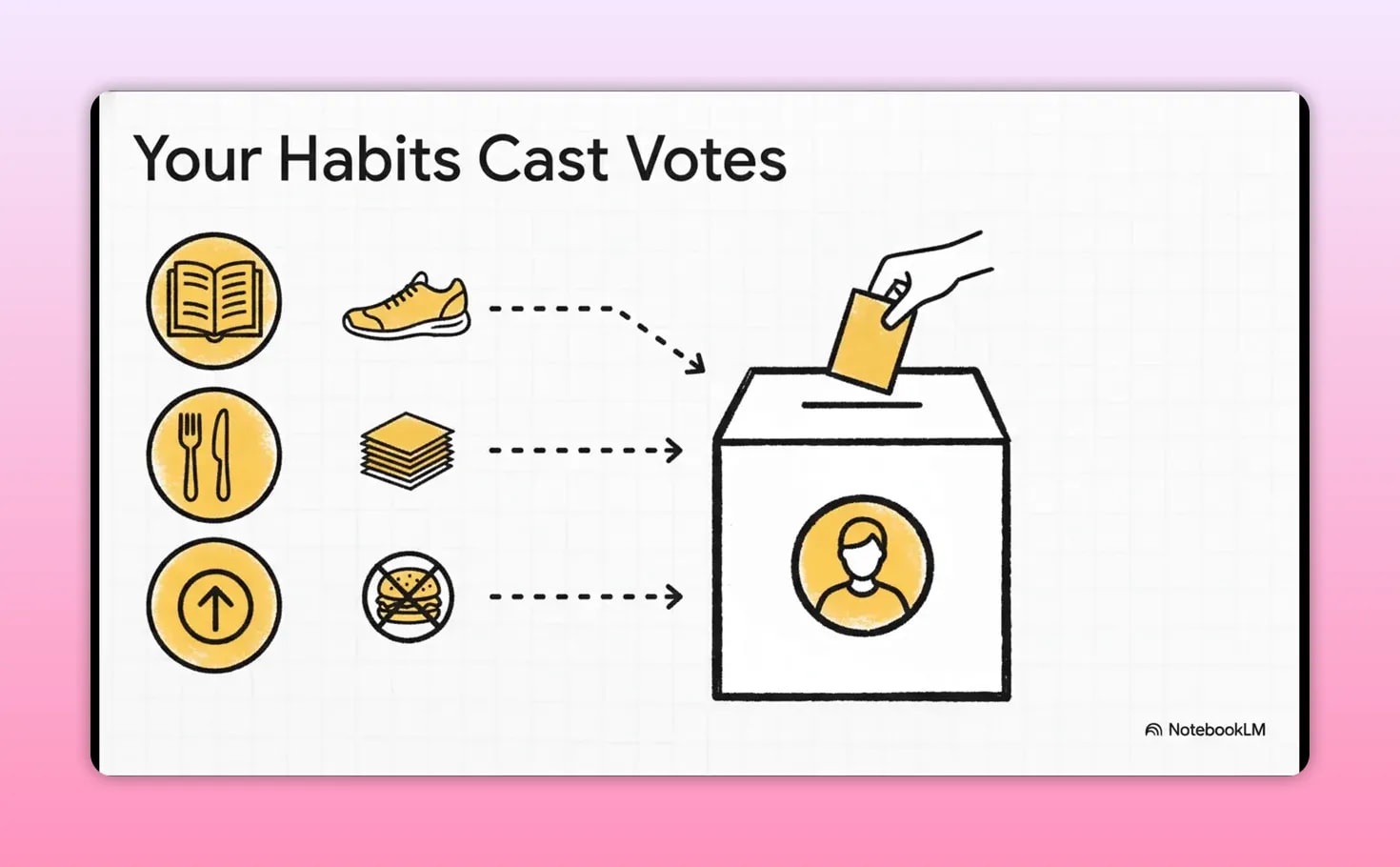
Every action is a vote.
Choose a nourishing meal, and you cast a vote for being someone who cares for their body. Finish a workout, and you cast another vote. Sit down and do focused work, and you cast a vote for being disciplined and reliable. Skip the needless expense, and you cast a vote for becoming financially responsible.
No single action transforms you on its own. But repetition builds evidence. And evidence reshapes identity.
What this looks like in everyday life
If you want to apply the Atomic Habits method, keep it simple.
- Pick the identity you want to reinforce.
- Choose one small habit that supports it.
- Make the cue visible.
- Make the habit easy enough to repeat daily.
- Give yourself some immediate satisfaction for following through.
For example:
- Identity: I am a reader. Habit: Read one page before bed.
- Identity: I am active. Habit: Walk for ten minutes after lunch.
- Identity: I am organised. Habit: Reset my desk before finishing work.
- Identity: I am financially aware. Habit: Check spending for two minutes each evening.
None of these habits look life-changing on their own. That is the point. They are small enough to repeat and meaningful enough to point your life in a new direction.
The real question behind Atomic Habits
The lasting message here is not “be more motivated.” It is “be more intentional with the tiny actions that shape your future.”
Big transformations usually hide inside ordinary days. They show up in the habits that feel too small to celebrate and too easy to postpone. But those are the habits doing the quiet work of building a new life.
So the question is not only what you want to achieve.
The real question is this: based on the habits you are practising right now, who are you becoming?

Ready to Unlock Your Ultimate Potential—and an Additional Income?
Sign up today to instantly receive the first four chapters of our Biohack Your Life™ to “Own Your Life” ebook for free!
True biohacking isn’t just about optimizing your body and mind; it’s about claiming total autonomy over your time and your finances. If you're ready to boost your daily energy, sharpen your focus, and discover how to build an additional income, it’s time to take control.