Skip to content


Duplicating a network marketing business means giving new team members a process they can repeat and teach to someone else. It does not mean asking them to copy your confidence, memorise your presentation or become persuasive salespeople overnight.
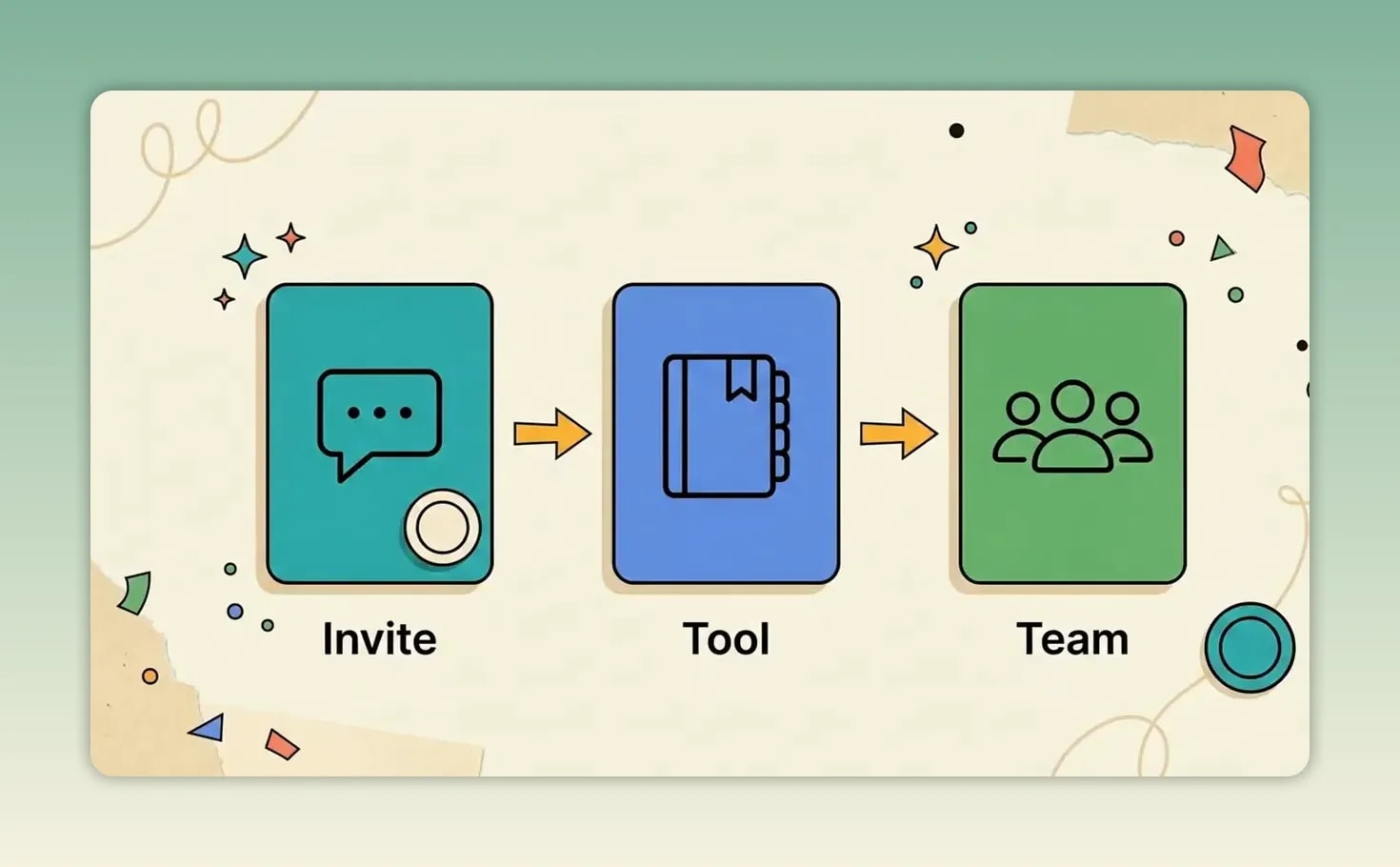
A practical approach is to separate the work into three roles: invite someone to learn more, share a resource that explains the opportunity, and connect interested people with an experienced team. This reduces how much presenting and question-answering falls on any one person.
For busy parents, teachers, coaches and people building a home business alongside other commitments, that distinction matters. The aim is a manageable, teachable process, not another responsibility that depends entirely on your availability.
Key Takeaways
- Duplication means teaching a repeatable process, not asking new members to copy your personality.
- Use brief invitations to establish interest before sharing a consistent introductory resource.
- Connect interested people with experienced support rather than answering every question yourself.
- A simpler system redistributes the work but does not guarantee income or business growth.
- Key Takeaways
- What Business Duplication Actually Means
- The Invite, Tool and Team Framework
- Prepare the Resource and Support Before Sending Invitations
- How to Invite Someone Without Turning It Into a Pitch
- What to Do When Someone Says Yes
- Help New Team Members Repeat the Process
- Common Mistakes That Make Duplication Harder
- Start With One Repeatable Action
What Business Duplication Actually Means
In network marketing, duplication is the transfer of a repeatable working method from one team member to the next. A process is genuinely duplicable when a beginner can understand it, use it with support and eventually show another beginner how to do the same.
That is different from building a business around one talented presenter. If every interested person needs your explanation and every new member needs your constant encouragement, you remain the bottleneck.
The useful test is simple: could a new teammate follow this process without first becoming an expert?
- If they need to memorise the entire marketing plan, the process is demanding.
- If they need your personality to make an invitation work, the process is difficult to transfer.
- If they can send a brief message, share an established resource and arrange a team introduction, the process is easier to teach.
The third-party invitation approach associated with Don Failla is built around this division of responsibilities. Instead of making the distributor the source of every explanation, it directs people towards a resource and experienced support.
The Invite, Tool and Team Framework
The three parts work together. An invitation without a useful resource leaves you doing the explaining. A resource without a team leaves you handling every question. A team without a simple invitation process may never meet the people who could benefit from its support.
| Part of the process | Its purpose | Your responsibility |
|---|---|---|
| Invite | Ask whether someone is open to receiving information. | Send a short, clear, permission-based message. |
| Tool | Explain the company, products and business opportunity consistently. | Share the resource after the person agrees. |
| Team | Provide experienced answers and personal support. | Connect an interested person with the appropriate meeting or contact. |
This is not a way to build a business with literally no communication. You still send messages, maintain relationships and help people find the next step. What changes is that you no longer have to deliver every presentation or handle every concern alone.
Prepare the Resource and Support Before Sending Invitations
Although the prospect moves through invitation, resource and team support in that order, your preparation should start with the latter two. Knowing what you will share and who will answer questions prevents hesitation when someone accepts your invitation.
Choose a resource that provides a complete introduction
The resource used in the Biohack Your Life approach is the free first four chapters of the Biohack Your Life ebook. These introduce the business, the products and the opportunity, allowing someone to explore the details independently.
A shared resource keeps the introductory message consistent. Unlike an improvised explanation, it does not change according to your nerves, energy or memory that day.
The presentation model described for this approach allocates approximately 20 minutes across three subjects:
- Company: about 3 minutes.
- Products: about 7 minutes.
- Marketing plan: about 10 minutes.
Those timings provide a guide to a focused presentation, not a guaranteed reading time for every person. The important principle is that the introduction has a clear scope and can be completed in one sitting.
Before sharing a resource, check that it:
- Explains the core information you would otherwise be tempted to present yourself.
- Is straightforward to access and share.
- Gives the recipient a realistic sense of what they are being asked to review.
- Can be used consistently by new team members.
- Clearly distinguishes education about the opportunity from any promise of earnings.
Know how to make the team connection
Team support can take two forms: a webinar where experienced members explain the opportunity and address common questions, or a personal online meeting for individual discussion.
Identify that route before you begin inviting people. You should know which meeting or experienced contact is available, rather than scrambling to find help after questions arrive.
The resource supplies the introduction; the team provides the conversation. Neither requires you to pretend to know more than you do.
How to Invite Someone Without Turning It Into a Pitch
An invitation asks for permission to share information. It does not ask someone to join, buy a product or decide whether the business is right for them.
A text or direct message is enough. The suggested length is something that takes roughly 15 to 45 seconds to read, although a shorter message is often all you need.
A simple invitation example
Hi Sam, I’m exploring a home-based business opportunity and have a short introduction that explains it. Would you be interested in receiving it?
This example keeps the purpose clear without attempting to explain the compensation plan, products or possible earnings. Adapt the wording to your relationship, but keep the request small.
A useful invitation has three ingredients:
- A brief reason for the message: what you are exploring or sharing.
- A defined resource: a short introduction or a few chapters.
- A permission question: whether the person would like to receive it.
Keep it brief, but do not be evasive
Avoid turning the initial message into a long explanation. That puts you back in the presenter role before the person has even agreed to learn more.
However, brevity is not an excuse to conceal the nature of the opportunity. If someone asks what it is, answer plainly at a high level and offer the resource for the details. A genuine question deserves a genuine response.
Also avoid describing the opportunity as effortless or suggesting that it will replace a job. You are offering information, not predicting someone’s financial outcome.
Respect the response
If the person declines, accept their decision. If they agree, send what you offered. There is no need to add a second presentation to the message containing the resource.
The invitation does not need to be unusually clever. Repeatedly rewriting a straightforward message can become a substitute for taking action. Its job is to establish interest, not overcome every possible objection.
What to Do When Someone Says Yes
Acceptance of an invitation is permission to share the introduction, not agreement to join the business. Keeping that distinction clear makes the next steps more comfortable for both people.
- Send the agreed resource. Explain briefly what it covers.
- Allow independent review. Let the person read at a time that suits them, without requiring an immediate decision.
- Find out whether they want to continue. Ask whether they have questions or would find a conversation useful.
- Offer the team connection. Arrange a webinar or personal online meeting if they are interested.
A short handoff message could be:
If you’d like to discuss anything in the introduction, I can connect you with an experienced team member or share details of a group session. Would either be useful?
This keeps you involved without making you responsible for every technical explanation.
Your relationship still matters
Using a resource does not mean withdrawing from the relationship. It means letting the resource handle the information while you remain a helpful, honest contact.
You can also explain why you are exploring the business. Wanting more flexibility around family commitments, help with regular bills or another source of income is a personal motivation you can share without claiming a result you have not achieved.
Experienced team members may share their own stories to make the opportunity more relatable. Personal stories should provide context, not substitute for factual information or imply that another person will achieve the same outcome.
Do You Want to Learn How To Earn an Additional Income?
Start Owning Your Life
Help New Team Members Repeat the Process
A prospect handoff is only part of duplication. The next task is helping a new member use the same method rather than inventing an entirely different one.
The recommended emphasis is prompt support during the first 72 hours, while the new member is motivated to begin. Treat this as an onboarding priority, not a deadline that guarantees success.
A practical onboarding checklist
- Explain the three responsibilities: invite, share the resource and connect people with support.
- Provide the same introductory resource: avoid requiring a new member to create a presentation.
- Make team support accessible: show them how to join a group call or arrange an experienced contact.
- Help them send one invitation: make the first action manageable.
- Recognise small progress: acknowledge taking action and learning the process, not only enrolments.
- Support willing participants: offer help without treating a lack of follow-through as a personal rejection.
Group calls let beginners hear explanations from experienced members instead of relying entirely on someone who is also new. Recognition and relationships can provide encouragement when an invitation does not lead anywhere.
The goal is for new members to understand the process well enough to pass it on. Simply referring every task back to you creates dependency rather than duplication.
Common Mistakes That Make Duplication Harder
Making expertise a prerequisite for action
When beginners believe they must know every product detail and every part of the plan before sending an invitation, the starting point becomes unnecessarily demanding. Use the resource and team support for detailed explanations.
Sharing a resource, then presenting it all over again
A long explanatory message alongside the resource defeats much of its purpose. Provide enough context to make the resource clear, then let it do its job.
Confusing a simple process with passive income
Reducing your presentation workload does not remove the need for effort, consistency or support. The framework redistributes work; it does not eliminate work or guarantee earnings.
Assuming a third-party resource is independent evidence
Here, “third party” means that someone or something other than you delivers the explanation. A business-provided ebook is still material about that business, not an independent assessment of it.
People considering a network marketing opportunity should also use independent guidance, such as the US Federal Trade Commission’s consumer guide to multi-level marketing, when evaluating the business rather than relying only on introductory materials or personal stories.
Measuring progress only by how busy you feel
Hours spent rehearsing, explaining and encouraging can feel productive while leaving the business just as dependent on you. A more useful question is whether another person can perform the next step without you taking over.
Start With One Repeatable Action
Choose the introductory resource, confirm the team support route and invite one person this week. If they accept, share the resource. If they remain interested after reviewing it, offer an experienced team connection.
That small sequence is the foundation of a process someone else can learn. Its value is not that it removes every conversation, but that it stops requiring one person to carry every conversation.
This framework is education and training, not a promise of income. A simpler process can be easier to repeat, but results vary and no system can guarantee a business outcome.

Ready to Unlock Your Ultimate Potential—and an Additional Income?
Sign up today to instantly receive the first four chapters of our Biohack Your Life™ to “Own Your Life” ebook for free!
True biohacking isn’t just about optimizing your body and mind; it’s about claiming total autonomy over your time and your finances. If you're ready to boost your daily energy, sharpen your focus, and discover how to build an additional income, it’s time to take control.