Skip to content


Real success is not about having all the answers. It is about what you do when you discover you do not.
That is the radical idea at the heart of Ray Dalio’s approach to growth. The most valuable lessons rarely arrive neatly packaged in a book or a motivational quote. They are forged in the uncomfortable moments: the failed presentation, the bad decision, the plan that falls apart, the feedback that stings.
The point is not to chase pain for its own sake. The point is to use it. When failure becomes reflection, reflection becomes a better way of operating. Over time, those better ways of operating become principles.
Success Starts With What You Do Not Know
Life keeps moving, a bit like a river. New situations, problems, opportunities and setbacks keep coming downstream. You cannot stop that flow, and you cannot avoid every difficult encounter.
What you can control is your response.
A principle is not a vague rule to put on a wall. It is a practical, repeatable strategy for handling situations that keep showing up, whether in your work, relationships, finances or personal goals. It is a decision rule built from experience.
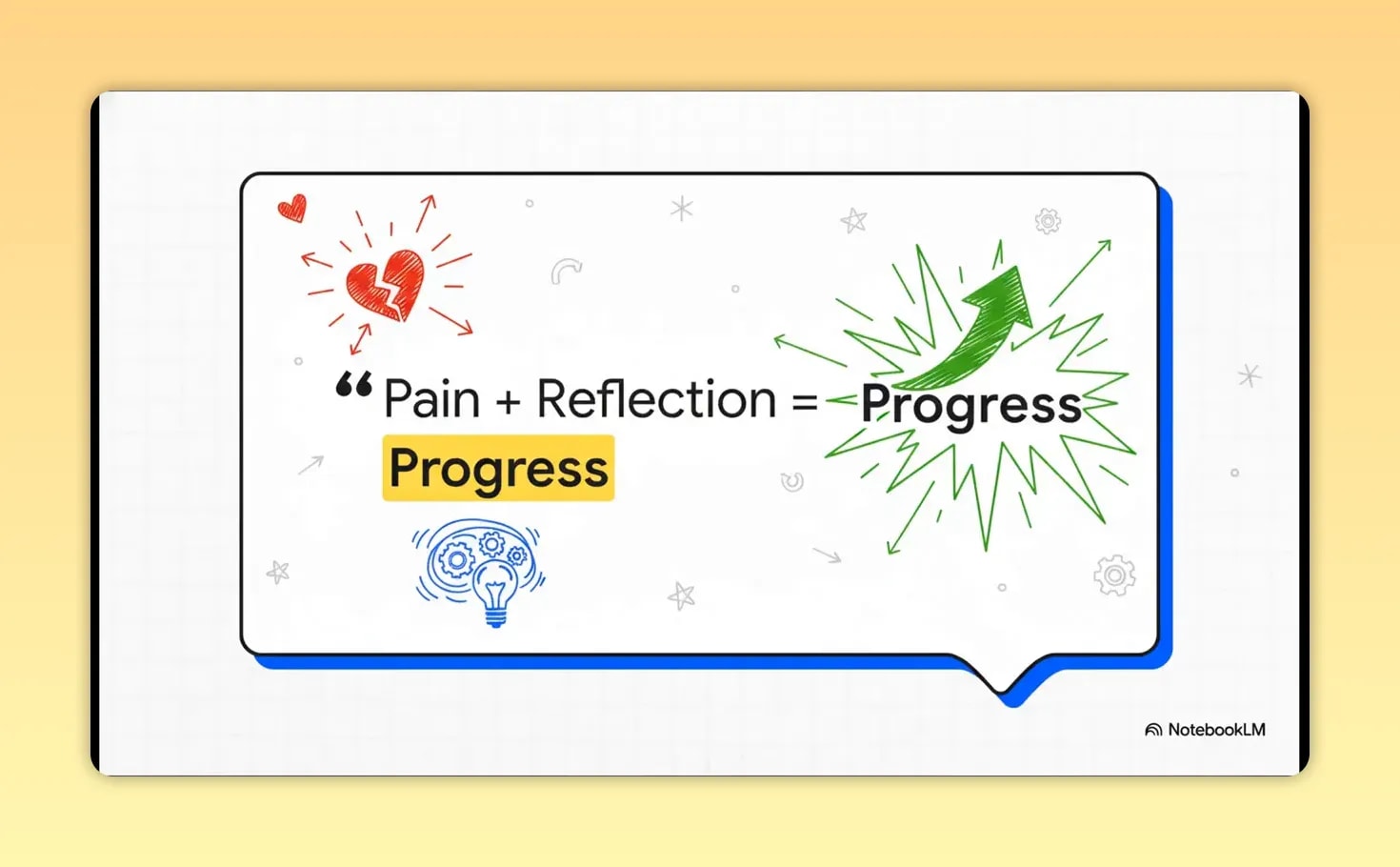
The formula is simple:
Pain + reflection = progress.
Imagine a presentation goes badly. The immediate pain might be embarrassment or frustration. But instead of simply replaying the moment, pause and diagnose it. Were you underprepared? Did you misunderstand what the audience needed? Did you fail to practise?
From there, you can create a principle: Before every important presentation, I will do a practice run with someone who can challenge my message.
That is how a mistake stops being just a mistake. It becomes an upgrade.
The Failure That Changed Ray Dalio’s Approach
This was not just a nice theory for Dalio. His entire philosophy was shaped by a spectacular public failure.
In the early 1980s, he was highly confident in his analysis of the markets. He made a major, public prediction that the US economy was heading towards a serious catastrophe. He committed fully to that view.
Then the opposite happened. The market entered one of the longest bull runs in history.
Dalio was not slightly off. He was completely wrong, and the cost was enormous. Bridgewater collapsed. He had to let go of every employee, people he genuinely cared about. The financial pressure became so severe that he borrowed $4,000 from his father to cover family bills.
That is the kind of moment that can either break your confidence completely or force you to build something stronger than confidence: a process.
Dalio chose the second path. Rather than promising himself he would try harder next time, he created a system for learning from problems before they repeated themselves.
The Five-Step Process for Personal Evolution
Growth is not a one-time breakthrough. It is a loop: strive, encounter problems, learn, adapt, repeat. Dalio’s process has five steps.
- Set ambitious goals. Decide what you genuinely want to achieve, not what merely feels safe or convenient.
- Identify the problems. When you pursue meaningful goals, obstacles are inevitable. Notice them instead of pretending they are not there.
- Diagnose the root cause. Go beyond the surface problem. Ask what is actually producing the result you do not want.
- Design a plan. Create a specific response that addresses the cause, not just the symptom.
- Execute the plan. Put the new approach into practice, then learn again from what happens.
The third step is where real change happens. It is easy to identify that something went wrong. It is much harder to identify why it happened without making excuses, blaming someone else or settling for a shallow explanation.
This is why principles matter. They capture what you have learned and make it available the next time a similar situation appears.
Dalio sees this pattern as bigger than business or self-improvement. It is the cycle of evolution itself. Things either adapt and become stronger, or they stagnate and weaken. There is no meaningful standing still.
Do You Want to Learn How To Earn an Additional Income?
Start Owning Your Life
The Two Barriers That Keep Us Stuck
If the five-step process is so logical, why is it so hard to follow?
Because the biggest obstacles are often not in the outside world. They are in our own heads.
The Ego Barrier
The ego barrier is that defensive voice that appears when somebody challenges your idea. Instead of considering the feedback, you think, “They just do not get it.”
When ego is in control, feedback feels like a personal attack. We defend the decision, the plan or the identity we have built around being right. But protecting the feeling of being right can quietly prevent us from learning what is true.
The Blind Spot Barrier
The blind spot barrier is even trickier because it is invisible by definition. You cannot see what you cannot see.
A brilliant engineer may struggle to understand a customer’s perspective. A strong creative person may miss the operational details that make an idea workable. Skill in one area does not automatically produce clear vision in every other area.
These barriers are not proof that you are incapable. They are a reminder that no one has a complete view of reality alone.
Replace the Need to Be Right With the Joy of Learning
The breakthrough comes from a major mindset shift: replace the short-term satisfaction of being proven right with the deeper satisfaction of learning what is actually true.
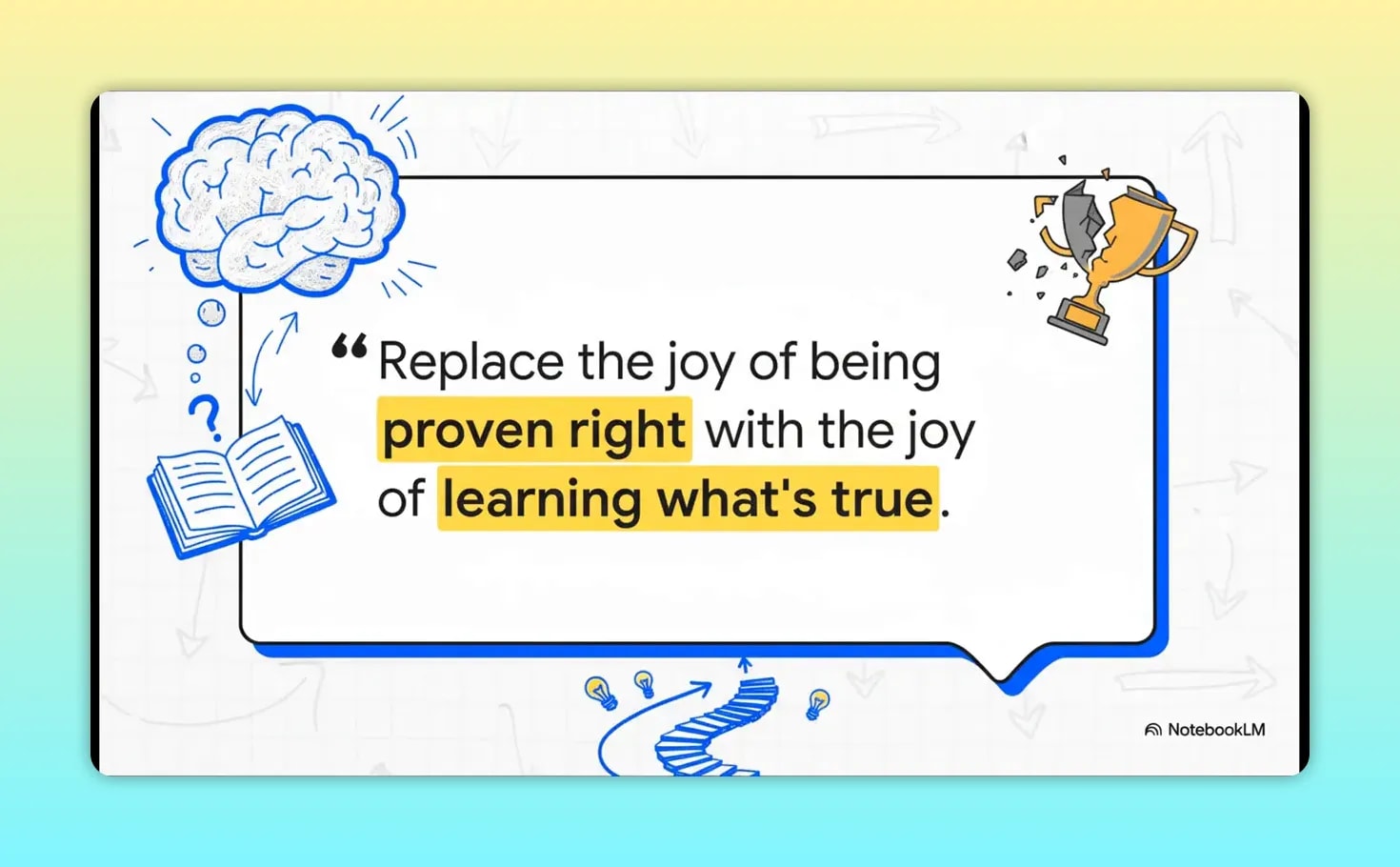
This means learning to welcome the moment you find out you were wrong. That moment may be uncomfortable, but it gives you something far more useful than reassurance: a clearer picture of reality.
It also means actively seeking smart people who disagree with you. The right disagreement does not make your thinking weaker. It adds dimensions you could not access by yourself.
It is like seeing the world in black and white, then suddenly being shown it in colour. The facts may not have changed, but your ability to interpret them has.
For a deeper look at this idea, explore Ray Dalio’s Principles, where the focus remains on radical open-mindedness, meaningful work and meaningful relationships.
Goals Are the Bait, Evolution Is the Reward
There is one final insight that changes how we think about achievement.
Money, promotions, recognition and major milestones matter because they give us something to aim for. But they are not the ultimate prize. They are the bait that gets us into the struggle.
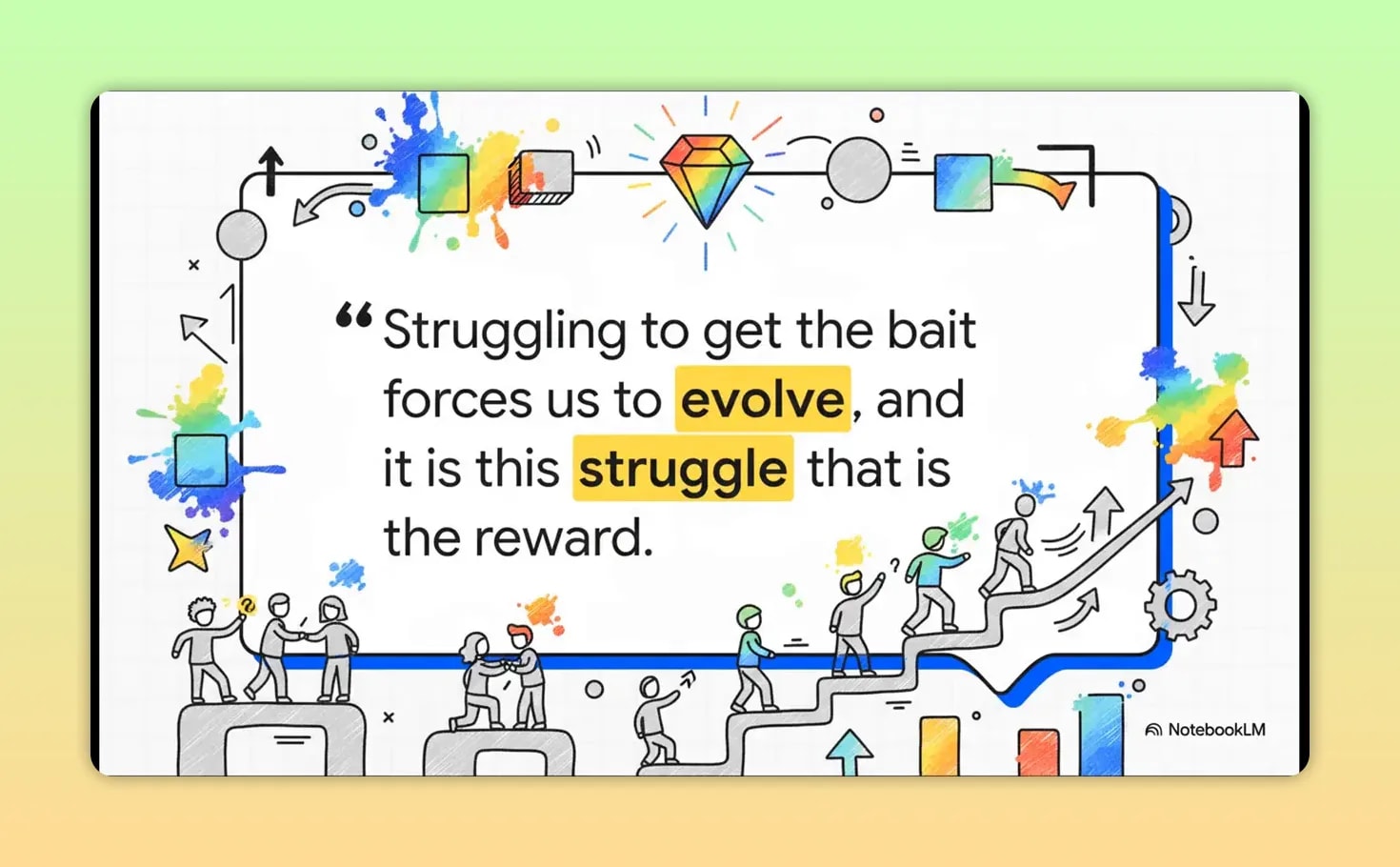
The real reward is the evolution that happens along the way. It is becoming more resilient after a setback. It is learning to manage ego. It is building the courage to seek criticism, diagnose problems honestly and try again with a better plan.
That is why the journey is not separate from the destination. The journey is where the most valuable transformation takes place.
Choose How You Will Evolve
Failure is painful. Honest reflection can be uncomfortable. Letting go of the need to be right takes real discipline.
But every difficult moment gives you a choice. You can defend the old approach, avoid the lesson and repeat the pattern. Or you can face the pain, reflect deeply, build a principle and evolve.
How will you choose to evolve?

Ready to Unlock Your Ultimate Potential—and an Additional Income?
Sign up today to instantly receive the first four chapters of our Biohack Your Life™ to “Own Your Life” ebook for free!
True biohacking isn’t just about optimizing your body and mind; it’s about claiming total autonomy over your time and your finances. If you're ready to boost your daily energy, sharpen your focus, and discover how to build an additional income, it’s time to take control.