Skip to content


What if massive success is not about avoiding failure, but about building a system that learns from it?
That is the core of Ray Dalio’s approach to life, work, decision making, and long term growth. His principles were not built from an easy run of wins. They came from a painful, public failure that forced him to replace certainty with a much better question: How do I know I am right?
A catastrophic mistake can become your greatest advantage
In 1982, Dalio made a huge call that the economy was about to collapse. He was so convinced that he testified before Congress. Then the opposite happened. Markets surged, the prediction failed, and he lost his money along with money belonging to his clients.
He was left broke enough to borrow $4,000 from his father to support his family. That is a serious setback by anyone’s standards. But the turning point was not simply recovering financially. It was changing the mindset that created the mistake.
The problem was not that he had failed. Everybody makes mistakes, especially when they are pursuing ambitious goals. The real danger was believing so strongly that he was right that he did not properly challenge his own assumptions.

That experience led to a powerful shift from defending an opinion to investigating it. Instead of asking, “Why am I right?”, ask, “What am I missing, and how can I test this belief?”
That is where progress begins. Not with perfection. With honesty.
Pain plus reflection equals progress
If you are building a business, developing a skill, growing your income, or simply trying to own your life more fully, problems will show up. There will be disappointing results, difficult conversations, missed targets, and moments when your plan does not work.
Pain is not automatically proof that you are on the wrong path. Often, it is evidence that you have reached an edge where growth is possible. The key is what you do next.
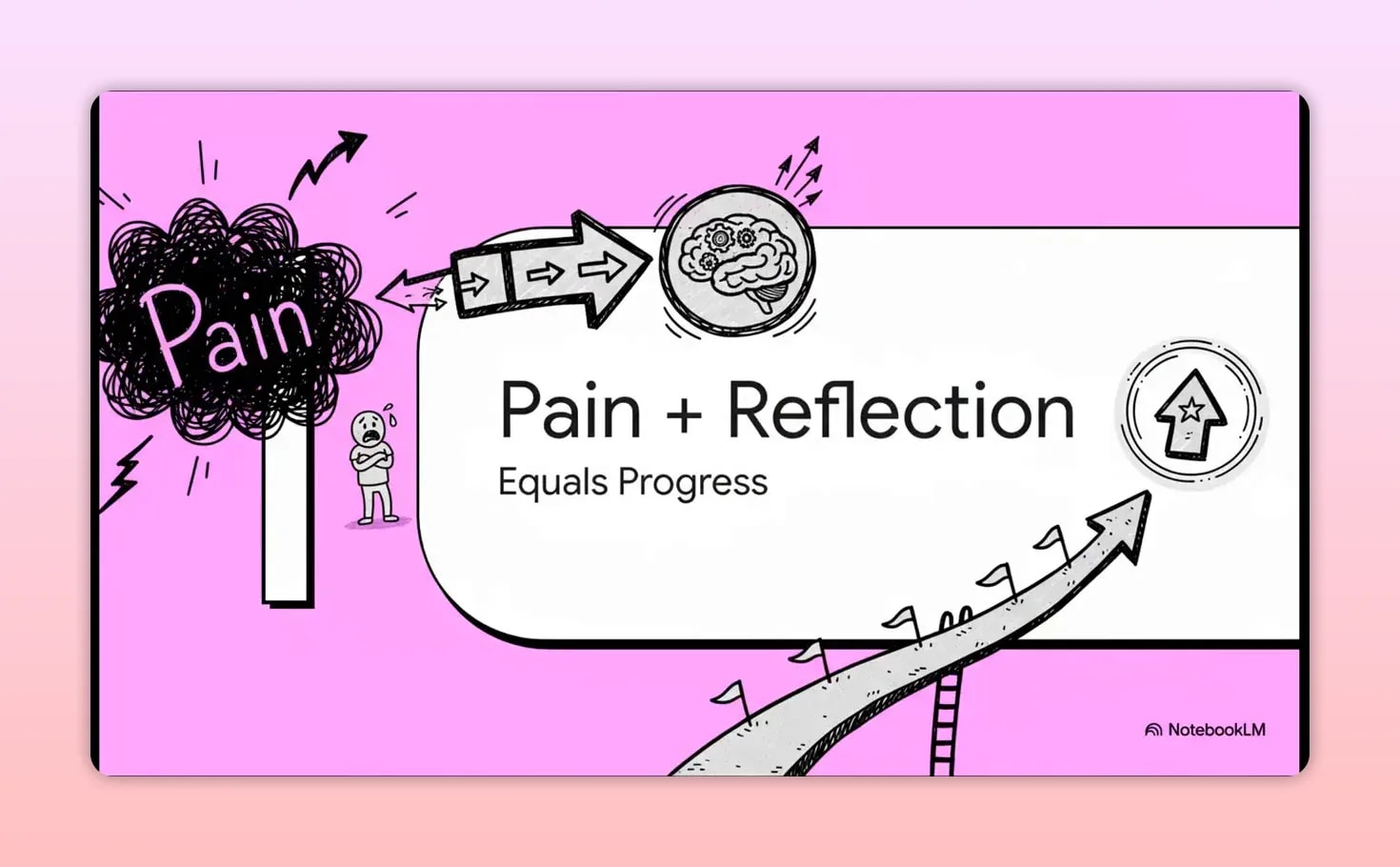
Pain by itself just hurts. Reflection is what turns it into something useful.
Rather than reacting emotionally to a failure, treat it like a puzzle. Diagnose it. Ask what happened, why it happened, and what you would do differently so that the same issue does not happen again.
When you get to the root cause, you uncover what Dalio calls a “gem”: a principle you can use again. It is a clear rule for handling a similar situation better in the future.
That is how mistakes become assets. You do not just survive the problem. You build a repeatable advantage from it.
Do You Want to Learn How To Earn an Additional Income?
Start Owning Your Life
The five step process for continuous improvement
Good intentions are not enough. Growth needs a process. Dalio’s framework is a five step loop designed to turn goals, problems, and lessons into forward motion.
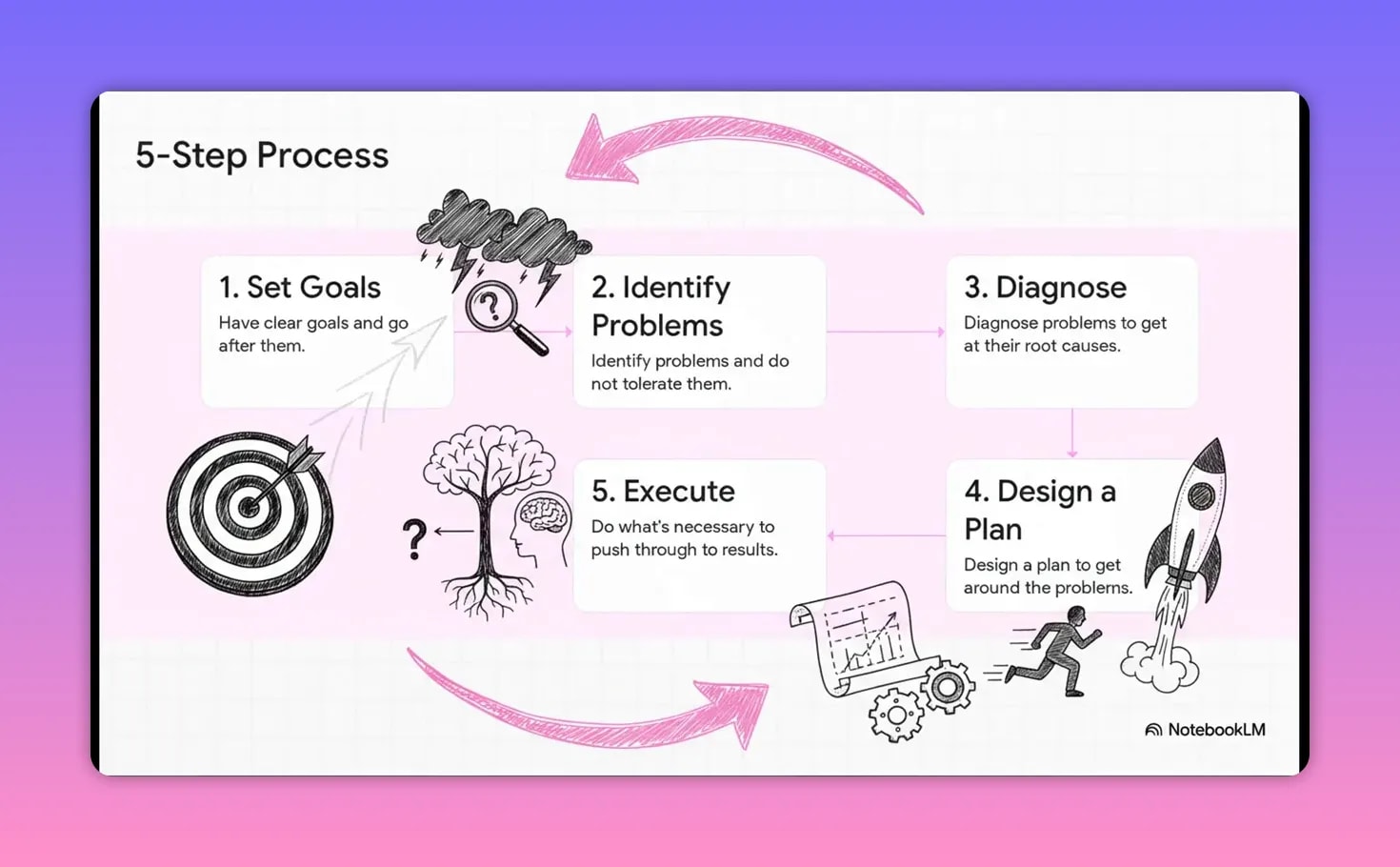
- Set clear goals. Know what you are trying to achieve. Without clarity, it is impossible to tell whether something is actually a problem or simply a distraction.
- Identify the problems. Do not run from what is going wrong. Name it clearly. A problem that stays vague cannot be solved.
- Diagnose the root cause. Go deeper than the surface issue. Ask why it happened and what pattern, weakness, assumption, or system failure allowed it to happen.
- Design a plan. Build a practical path around the obstacle. The plan should address the cause, not just temporarily cover up the symptom.
- Execute. Put the plan into action. A good diagnosis without action changes nothing.
This is not a one time fix. It is a continuous cycle. You set a goal, discover a problem, learn from it, adapt, and keep moving. That is how measurable progress compounds over time.
Build an idea meritocracy, not a popularity contest
That personal system works incredibly well for an individual. But what happens when a company is filled with strong, independent people who all have opinions?
Dalio’s answer was to scale the same learning process into an organisational culture called an idea meritocracy.
An idea meritocracy is not a democracy where the majority always wins. It is not an autocracy where the boss simply decides. It is a system built to uncover the best possible answer, regardless of where that answer comes from.
The goal is meaningful work and meaningful relationships. The methods are radical truthfulness and radical transparency.
- Radical truthfulness means people say what they genuinely think instead of holding back to avoid discomfort.
- Radical transparency means important information, discussions, and reasoning are visible rather than hidden behind politics or hierarchy.
That can sound intense, because it is. But the point is not to be harsh or argumentative. The point is to create an environment where reality matters more than ego.
The three requirements for making the system work
A culture of open disagreement only works when everyone understands the rules. Three requirements are non negotiable.
- Be honest. Put real thoughts on the table. If people stay silent, the group loses access to useful perspectives and potential problems stay hidden.
- Disagree well. Approach conflict with curiosity rather than anger. The aim is not to win the argument. It is to discover what is true.
- Have a way to move on. Teams need agreed systems for resolving disputes and making decisions. Otherwise, disagreement becomes endless friction.
Thoughtful disagreement is not about proving someone wrong. It is about becoming less wrong together.
Use believability weighted decision making
So, if a team is not simply voting and the leader is not always making the final call alone, how does it decide?
Dalio uses believability weighted decision making. Every opinion is heard, but not every opinion receives the same weight on every topic. The weight depends on a person’s demonstrated credibility in that specific area.
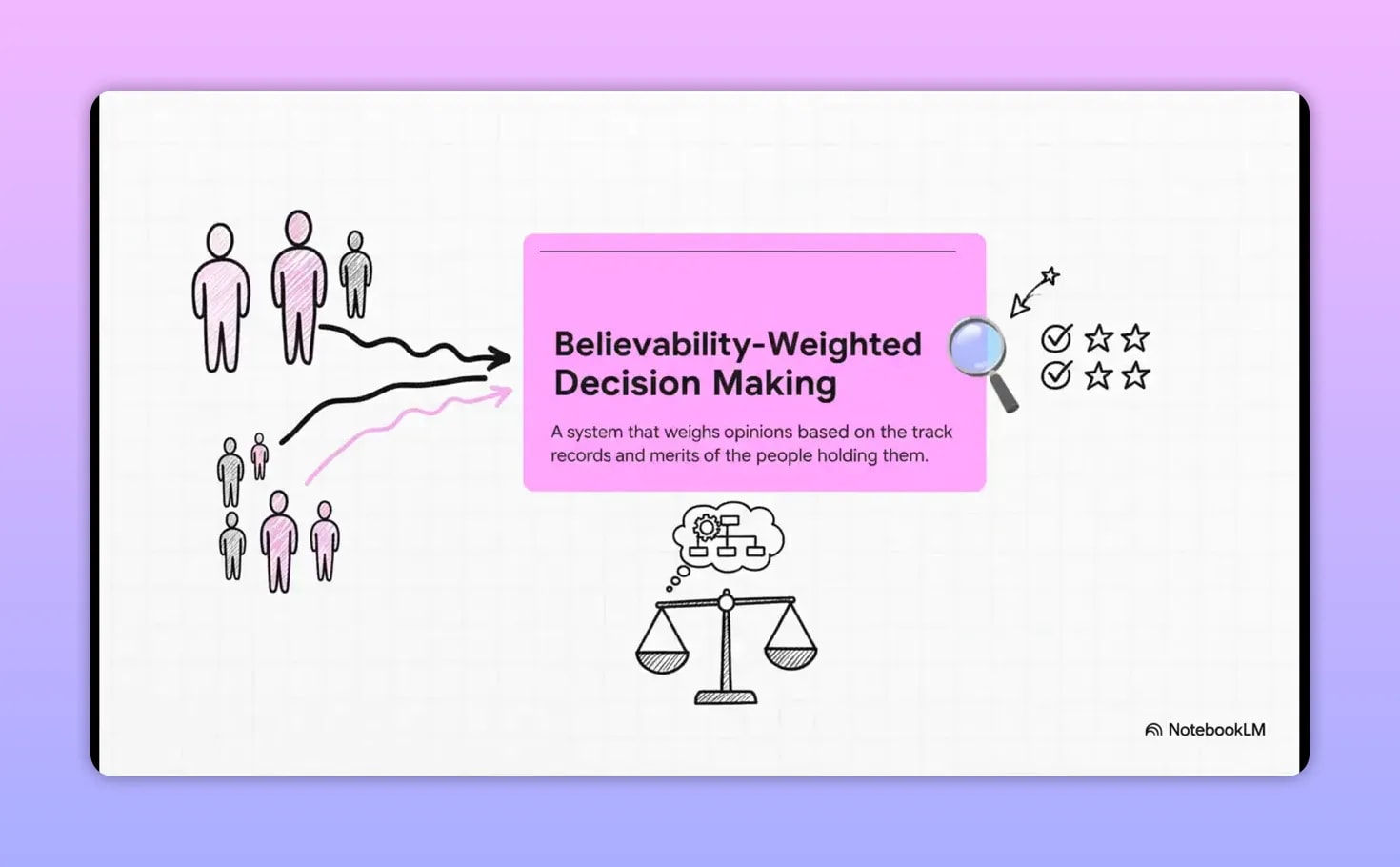
Imagine you are deciding on a marketing strategy. The input of someone with a proven record of successful campaigns should carry more weight than the input of someone who has never worked in marketing. That does not mean the less experienced person has nothing valuable to say. It means results matter when determining how much confidence to place in a recommendation.
Believability is earned through track record. It comes from having done the work, developed relevant expertise, and shown good judgement over time.
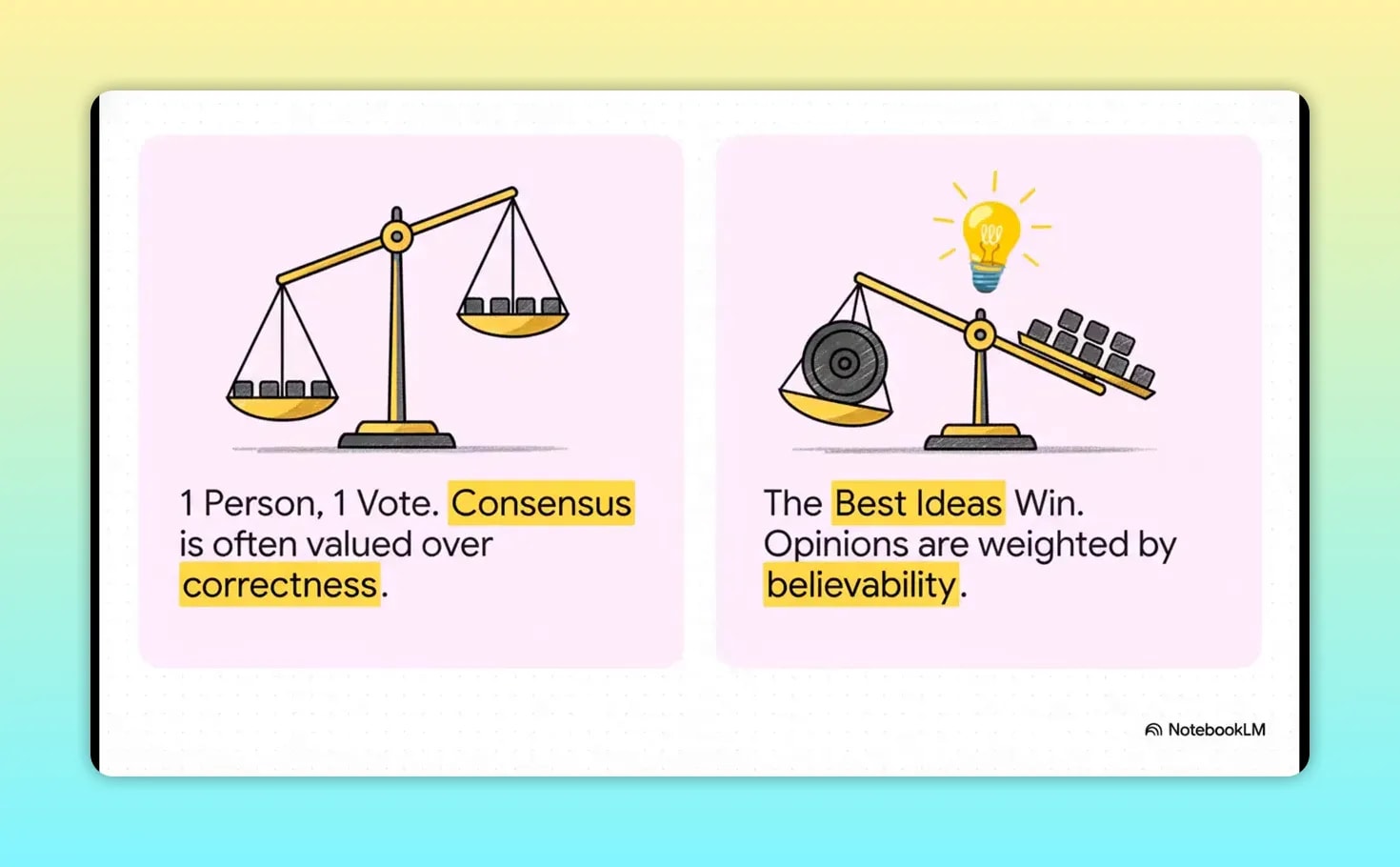
This is very different from a traditional one person, one vote approach. In a standard democracy, consensus is often the goal. In an idea meritocracy, the goal is correctness. The best idea should win even when it is not the most popular one.
Why this matters in your work and life
You do not need to work at Bridgewater to use this principle. It is a practical tool for business, career decisions, relationships, and personal growth.
One of the biggest traps is clinging to an opinion that has never been truly tested. We all carry beliefs about money, work, leadership, relationships, and what we are capable of. But how many of those beliefs have been challenged by someone who has more experience or a better track record in that particular area?
Holding a strong view is not the problem. Refusing to examine it is.
If you want to break free from a time for money trap, build a more effective business, or create additional income without running yourself into burnout, this mindset matters. Your results improve when you stop protecting your current assumptions and start testing them against reality.
Find your next gem
Choose one opinion you hold strongly right now. It could be about your work, your relationships, your income, or the wider world.
Then ask yourself:
- Have I genuinely opened this belief to thoughtful disagreement?
- What evidence would prove that I am wrong?
- Whose perspective would be more believable than mine on this subject?
- What principle could I create if I discovered a blind spot?
The next painful mistake does not have to be wasted. It can become the lesson that sharpens your decisions, strengthens your systems, and moves you closer to the life you actually want to build.
Do not aim to be right all the time. Aim to find out what is true, learn quickly, and keep progressing.

Ready to Unlock Your Ultimate Potential—and an Additional Income?
Sign up today to instantly receive the first four chapters of our Biohack Your Life™ to “Own Your Life” ebook for free!
True biohacking isn’t just about optimizing your body and mind; it’s about claiming total autonomy over your time and your finances. If you're ready to boost your daily energy, sharpen your focus, and discover how to build an additional income, it’s time to take control.