Skip to content


Rich Dad Poor Dad changed how millions of people think about money because it is not really a book about picking stocks or chasing quick wins. It is a story about two completely different ways of looking at work, income, security, and freedom.
At its core, the book asks a simple but challenging question: will you spend your life working for money, or will you learn how to make money work for you?
Two Dads, Two Money Mindsets
Robert Kiyosaki frames the book through the advice of two father figures.
Poor Dad, his biological father, was intelligent, highly educated, and committed to the traditional path: do well at school, get a secure job, climb the career ladder, and play it safe. His priority was security.
Rich Dad, the father of Kiyosaki’s best friend, had little formal education but built significant wealth. His priority was freedom. Instead of encouraging the boys to hunt for a good job, he pushed them to understand how money works, create opportunities, and eventually create jobs.
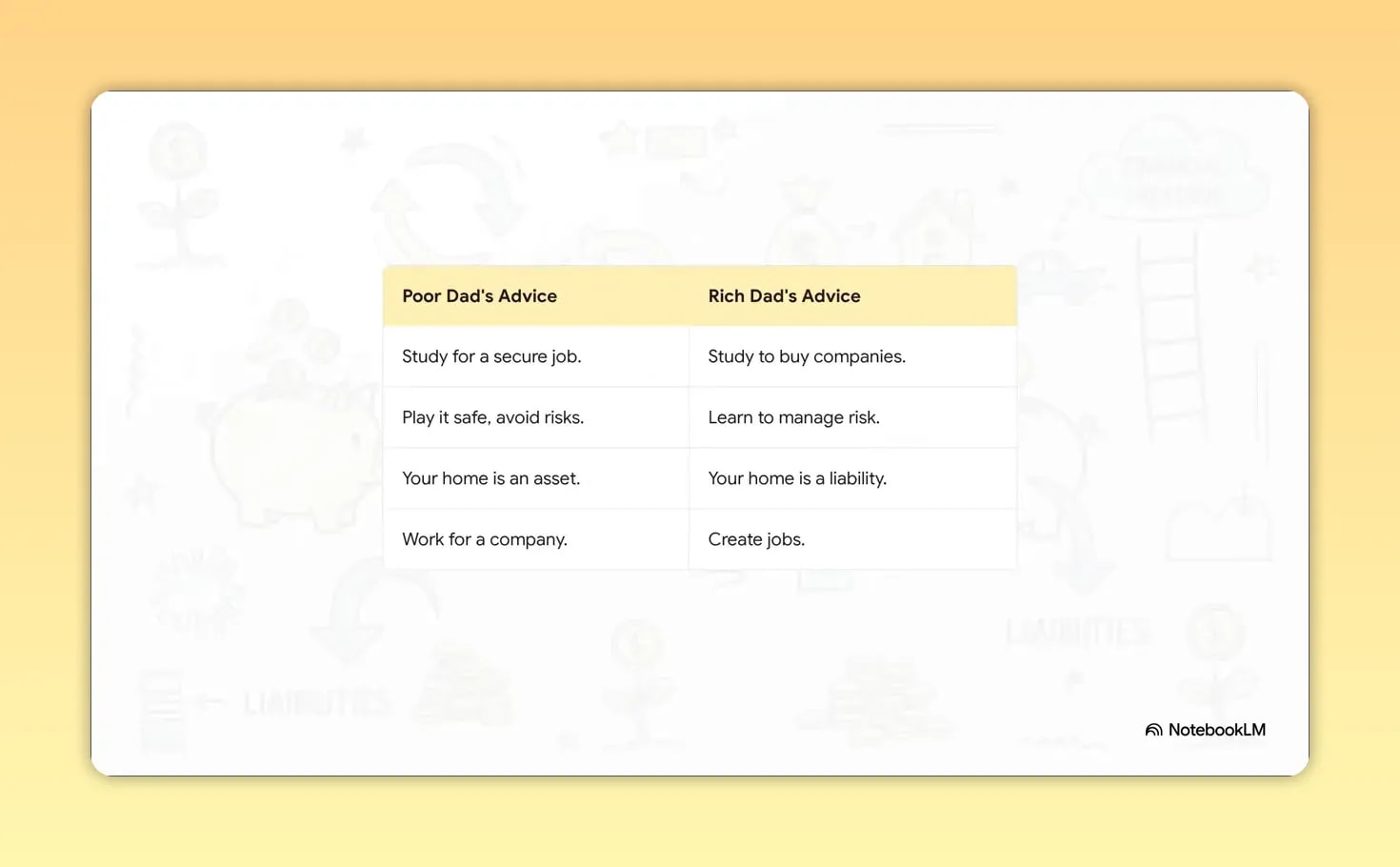
The contrast is not about intelligence or worth. It is about the financial playbook each person follows.
- Poor Dad’s playbook: Study hard, find a safe job, work for a raise, and treat your home as your biggest asset.
- Rich Dad’s playbook: Learn financial education, build or buy income-producing systems, take calculated risks, and question whether a purchase actually creates cash flow.
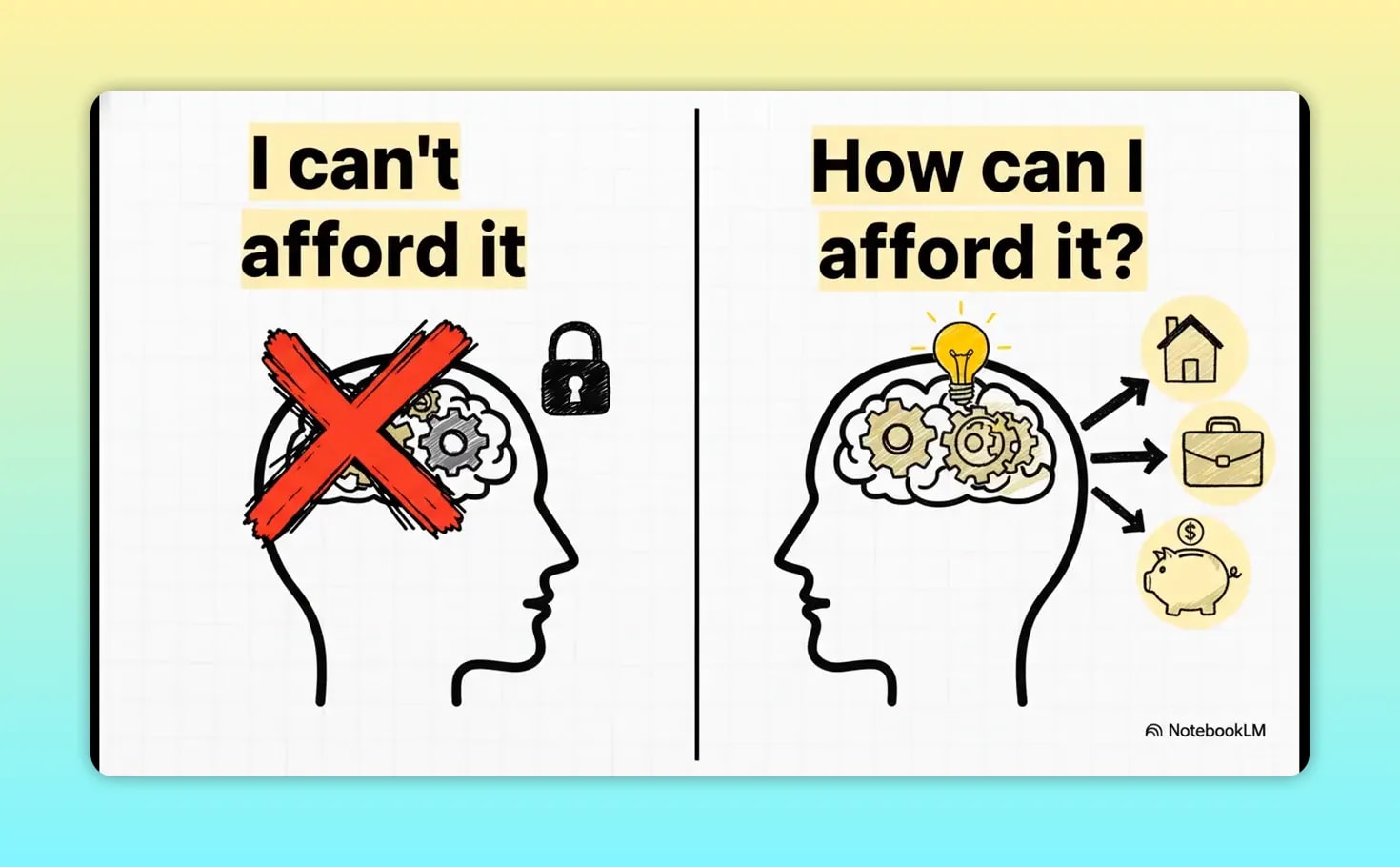
That difference starts with language. One mindset says, “I cannot afford it.” It is a statement that ends the conversation. The other asks, “How can I afford it?” That is a question, and questions force the mind to look for options, solutions, and opportunities.
Lesson One: Stop Trading All Your Time for Money
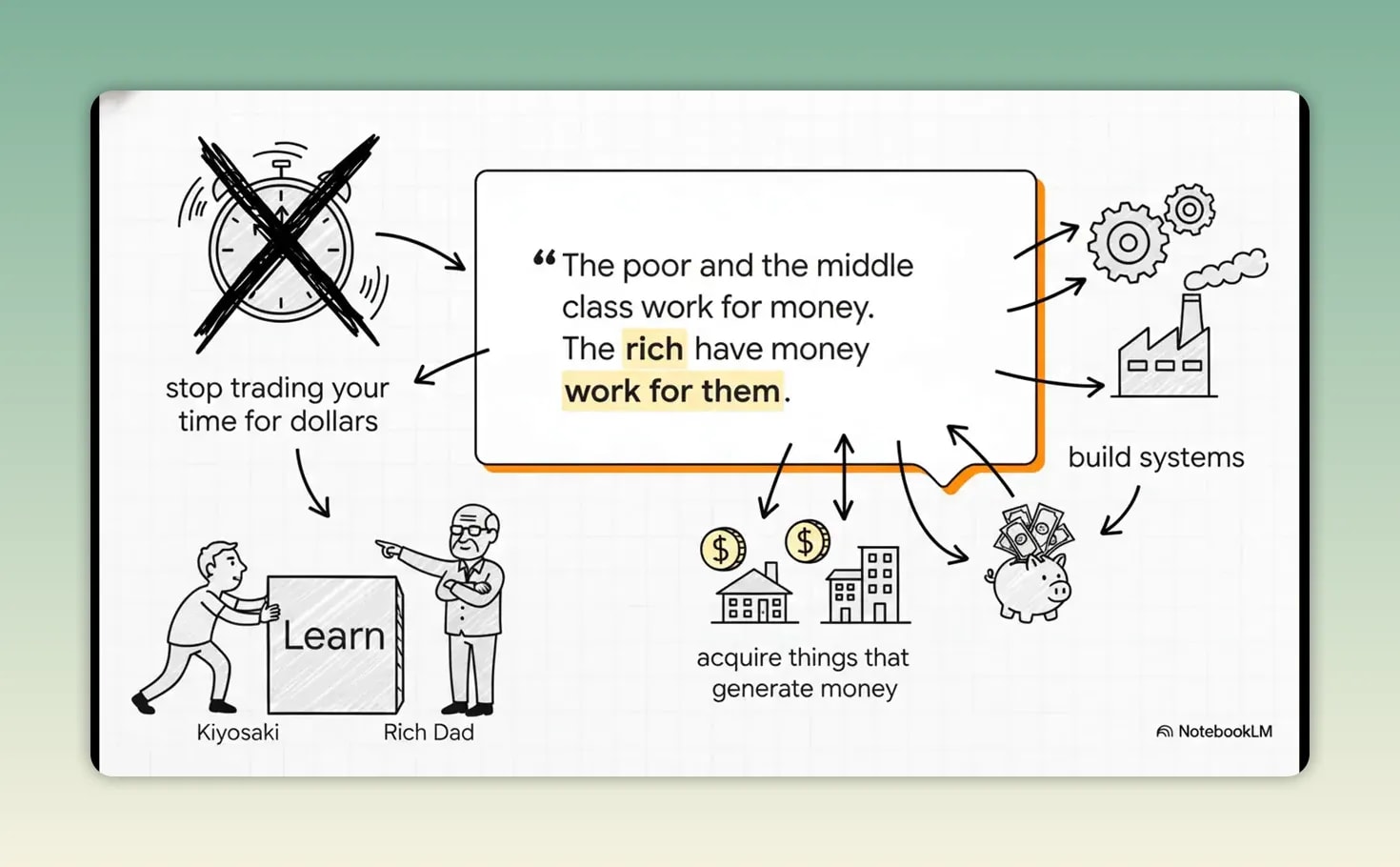
The first major lesson is simple: a job can provide income, but it is not the same thing as financial freedom. When all income depends on your hours, the money stops when you stop working.
Rich Dad’s goal was to teach Kiyosaki to look beyond the paycheque. The objective was to build systems and acquire assets that could generate income without requiring his constant presence.
The comic book library lesson
Kiyosaki began working for Rich Dad at age nine for 10 cents an hour. He became frustrated, felt underpaid, and was ready to quit. That discomfort was part of the lesson.
Rich Dad then persuaded the boys to work for free. Without a paycheque to focus on, they had to notice the opportunities around them.
They spotted one at a convenience store, where old comic books were being thrown away. The boys acquired the comics for free, set up a small library in an unused room, and charged other children 10 cents to come in and read them. They even hired Mike’s sister to run the operation.
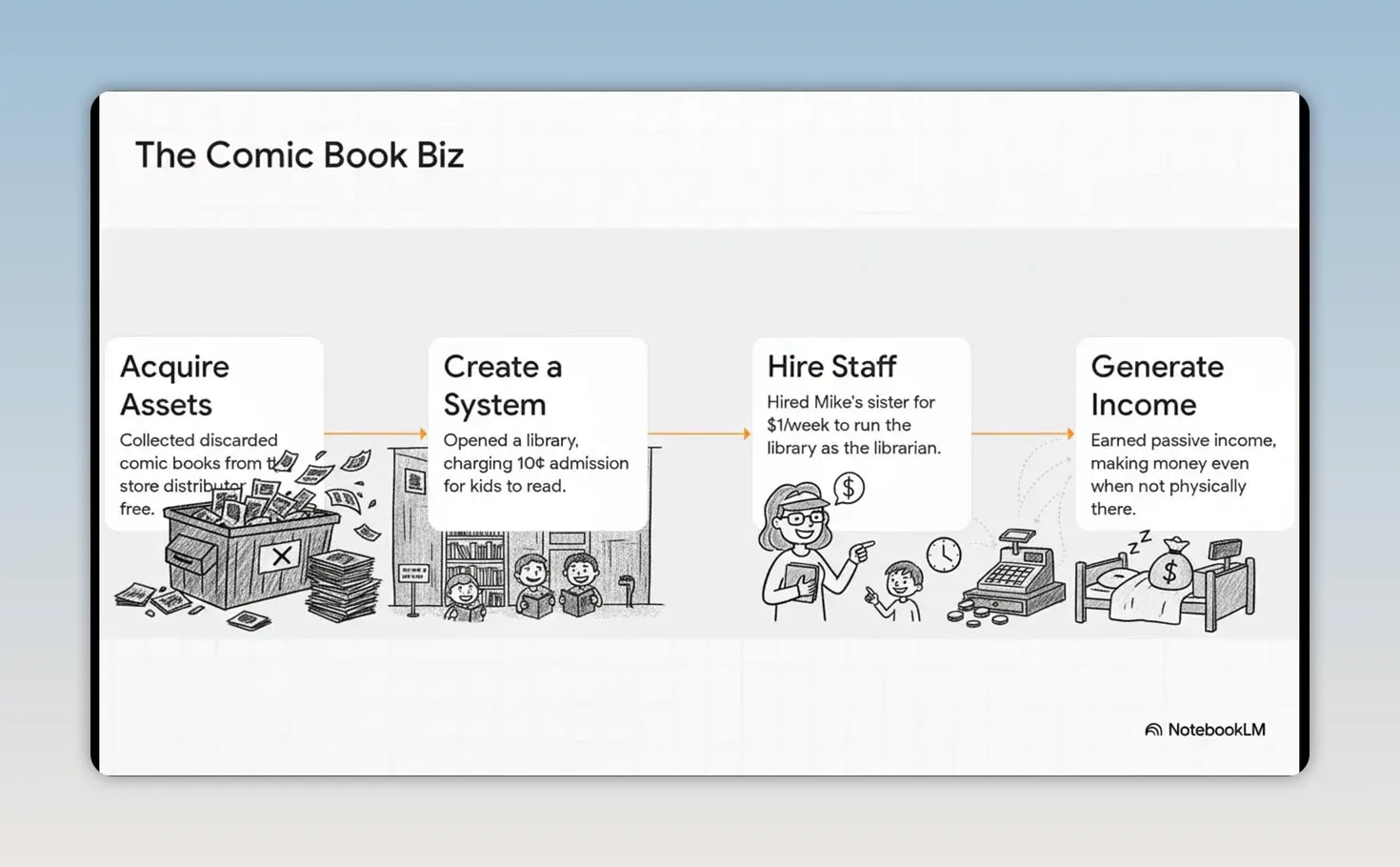
This was more than a childhood project. It was a tiny business system. The boys were making roughly $9.50 per week, and once the system was operating, they did not need to be there every moment to earn it.
That is the key idea: do not only work inside a business. Learn how to build something that can work for you.
Lesson Two: Know the Difference Between Assets and Liabilities
One of the most famous ideas in Rich Dad Poor Dad is its straightforward definition of an asset and a liability.
- An asset puts money into your pocket.
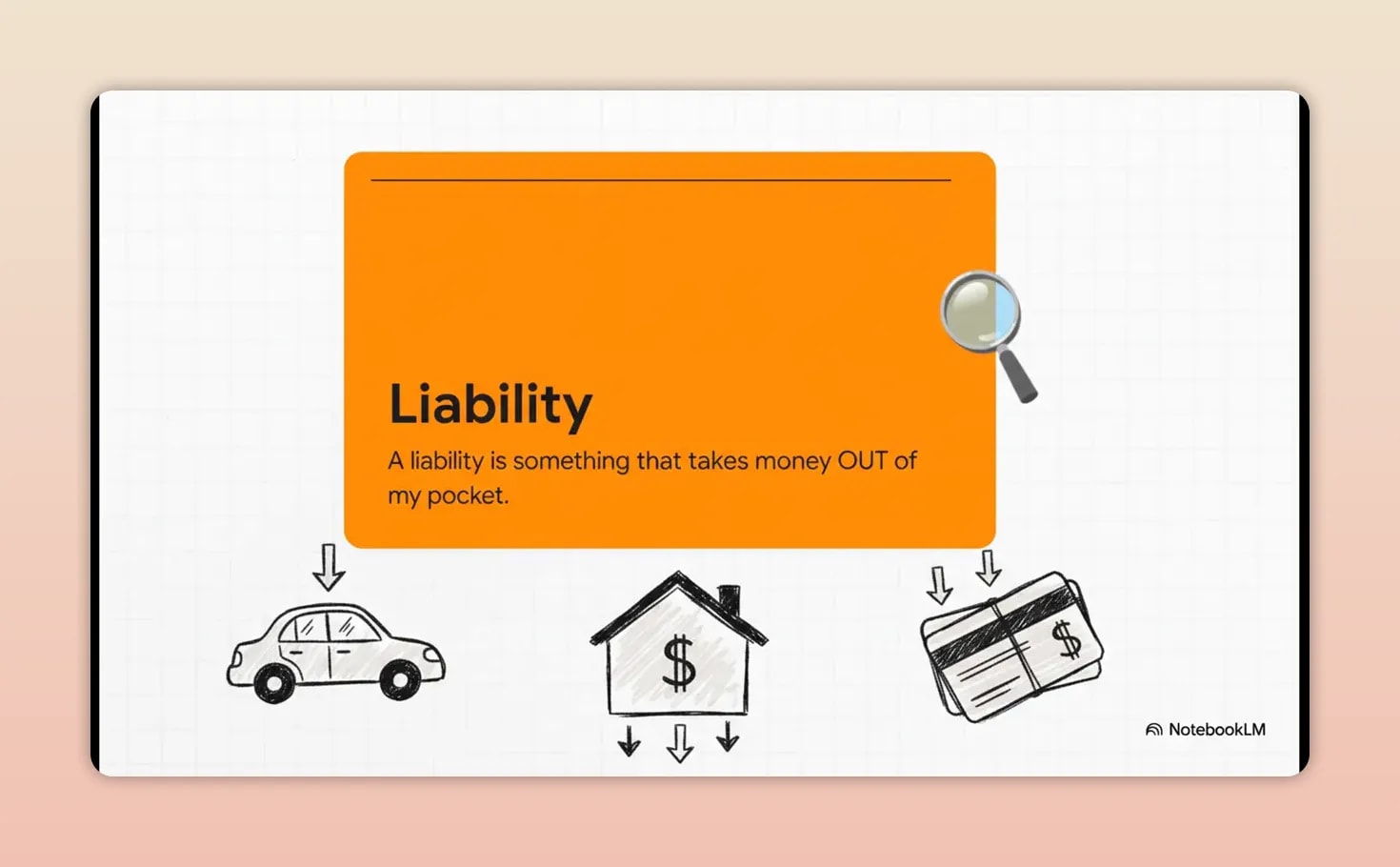
- A liability takes money out of your pocket.
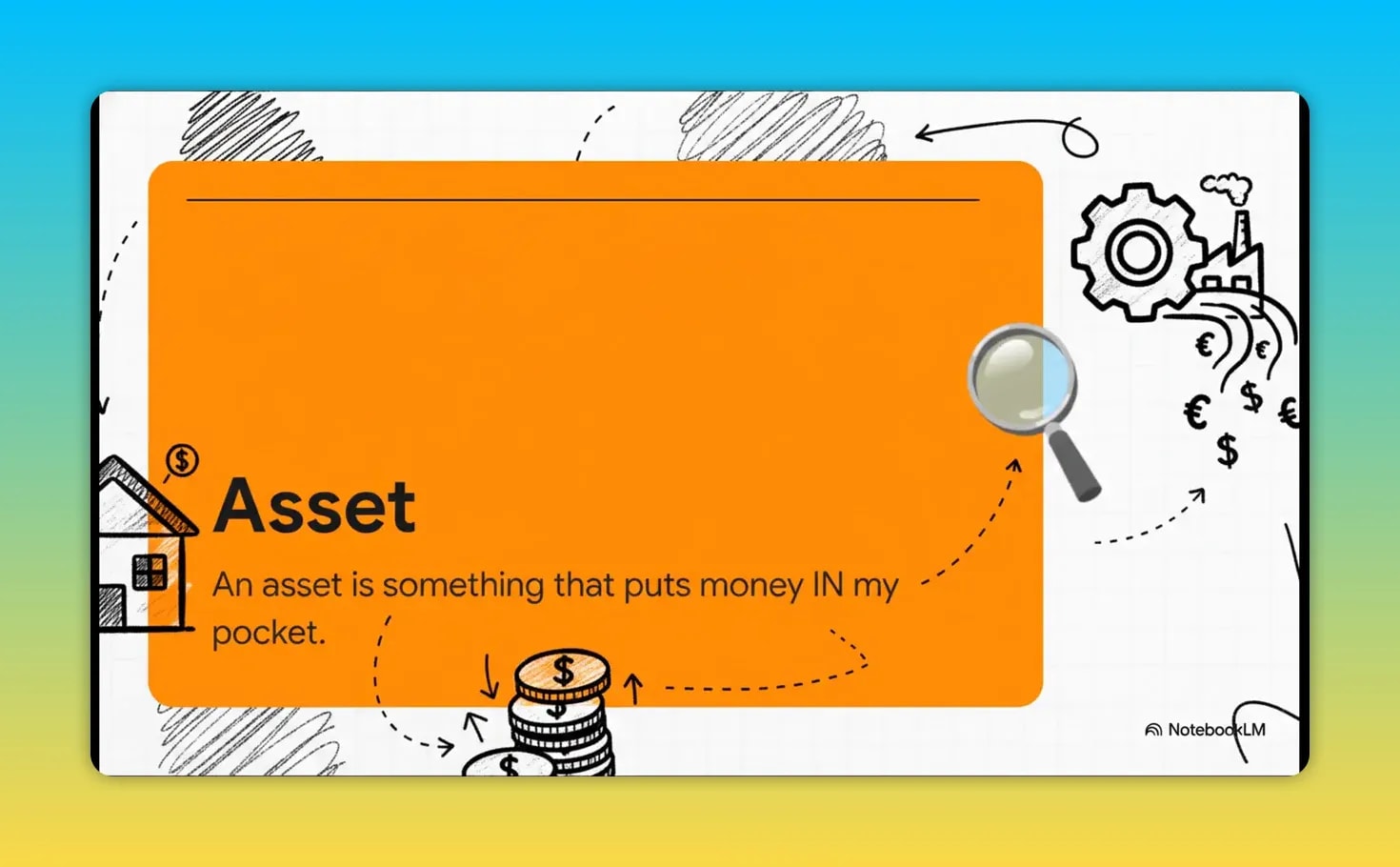
Using this cash-flow lens, examples of assets include:
- A rental property that produces monthly income
- Stocks that pay dividends
- A business that runs without requiring you to do all the work
Liabilities include expenses and obligations that consistently pull money from you, such as a car loan, credit card debt, or ongoing housing costs.
This is why the book challenges the common belief that the house you live in is automatically an asset. A primary residence may have value, but if mortgage payments, taxes, and maintenance continually require money from your pocket, Rich Dad classifies it as a liability from a cash-flow perspective.
The practical rule is clear: if you want to build wealth, spend more of your life acquiring assets that generate income. The aim is to grow your asset column until the income it produces can cover your expenses.
This is a useful personal-finance framework, not a replacement for professional accounting or financial advice. The important habit is to examine the cash flow behind every major purchase rather than relying on labels alone.
Do You Want to Learn How To Earn an Additional Income?
Start Owning Your Life
Lesson Three: Escape the Rat Race
The “rat race” is the familiar cycle of earning, spending, and needing to earn even more.
You work to pay bills. Then you receive a raise, upgrade to a bigger house or nicer car, take on higher monthly costs, and need to work harder to support the new lifestyle. You may be running faster, but you are not necessarily moving closer to freedom.
According to this philosophy, two powerful emotions keep the cycle going:
- Fear: the fear of not having enough, missing payments, or losing security.
- Desire: the pull of bigger homes, nicer cars, and all the things money can buy.
Neither emotion has to control your decisions. The way out is to become conscious of the cycle and direct money towards income-producing assets instead of automatically increasing liabilities.
Mind your own business
This does not mean abandoning your job tomorrow. Your job is your profession. Your real business, in Rich Dad’s language, is your asset column.
Keep the day job if it pays the bills. Then use extra income intentionally to acquire assets. Over time, the goal is for income from those assets to grow until it can cover your regular expenses.
Financial Security Versus Financial Freedom
The final takeaway is a choice between two paths.
The well-travelled path is built around financial security through employment. It can feel safe because it is familiar, but that security remains dependent on a job, employer, or boss.
The other path aims for financial freedom. It requires financial education, a willingness to think differently, and the discipline to take calculated risks. Its foundation is income generated by your assets rather than income tied only to your time.
The real power of Rich Dad Poor Dad is not a list of investment tips. It is the perspective shift. It pushes you to ask what road you are currently on, what your money is buying, and whether your choices are creating more freedom or more dependence.
Choose Your Next Financial Move
You do not need more hours in the day to begin changing your financial direction. You need a clearer understanding of where your money goes and a better vehicle for building income beyond your time.
Start with one honest question: what can I do today to strengthen my asset column? The answer may be small at first. What matters is building the habit of looking for opportunities, learning how money works, and making choices that move you closer to owning your life.

Ready to Unlock Your Ultimate Potential—and an Additional Income?
Sign up today to instantly receive the first four chapters of our Biohack Your Life™ to “Own Your Life” ebook for free!
True biohacking isn’t just about optimizing your body and mind; it’s about claiming total autonomy over your time and your finances. If you're ready to boost your daily energy, sharpen your focus, and discover how to build an additional income, it’s time to take control.