Skip to content


Most network marketers do not quit because the product is bad or the compensation plan is weak. They quit because they are exhausted.
They are tired of chasing friends, trying to remember scripts, handling objections they were never trained to answer, and forcing sales conversations that do not feel like them. For busy parents, teachers, and coaches, that pressure lands on top of an already full life.
The answer is not to become louder, push harder, or memorise a better pitch. The answer is to stop making yourself the presentation.
The real burnout problem in network marketing
Think about a normal weekday. You are up before the sun, feeding kids, preparing for the day, commuting, teaching, coaching, working, helping others, and trying to keep the home running. By the evening, your energy is gone.
Then traditional network marketing training often adds another job: make a list of everyone you know and start pitching them.
That creates a burnout engine. Your phone is always on. Home life and business blur together. You feel pressure to look successful and positive even when you are running on fumes. And every new conversation can feel like a performance.
The problem is not simply that outreach takes time. It is that the traditional approach can clash with who you are. When you genuinely care about people, repeatedly trying to steer friends and family into a sales conversation can feel manipulative, even when your intentions are good.
That internal conflict matters. Social rejection can feel deeply personal, and research has explored how social exclusion can activate pain-related responses in the brain. A classic study on social exclusion and physical pain helps explain why hearing no from people close to you can feel heavier than a simple business setback.
Warm-market exhaustion is not a lack-of-discipline problem. It is a system problem.
Why new distributors quit in year one
New distributors are often taught to prioritise the quantity of outreach over the quality and fit of the conversation. The expectation becomes: contact more people, send more messages, follow up harder, and keep pushing through rejection.
But if the method requires you to become someone you are not, consistency becomes almost impossible.
- Constant connection: every notification feels like work waiting for an answer.
- Unrealistic expectations: people expect rapid results, then feel like failures when growth takes time.
- No boundaries: family time, rest, and business activity all compete for the same hours.
- Social pressure: distributors feel they must stay upbeat, even when the process is draining them.
That is why decent, capable people can leave network marketing early. They do not necessarily reject the products or the opportunity. They reject a style of selling that feels unnatural.
If you are looking for a more grounded overview of how the industry works, read this beginner’s guide to network marketing. The important point here is simple: a business model should be built around a repeatable process, not around your ability to pressure people.
Don Failla’s simple reframe: Invite, Tool, Team
Back in 1981, Don Failla was managing an IHOP while building a network marketing business on the side. He saw new people burn through their warm market, become overwhelmed, and quit.
His breakthrough was a radical reframe: your job is not to explain the entire business. Your job is to invite someone to look at a tool.
That idea became the ITT system:
- Invite
- Tool
- Team
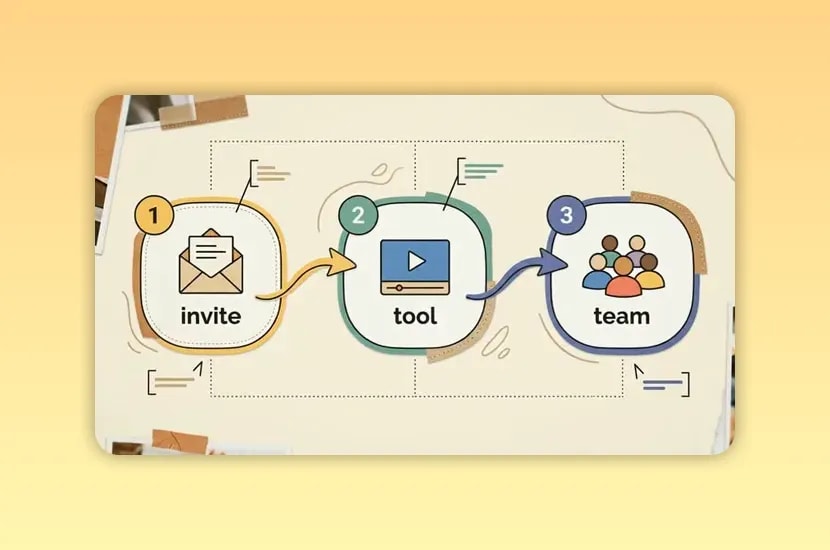
1. Invite
The invitation creates curiosity without pressure. You are not giving a full presentation, trying to close someone, or defending every detail of the opportunity.
You are simply asking whether they are open to looking at something that may help them earn additional income without having to sell.
The power of this step is its simplicity. A person can say yes, no, or not now. Your job is not to force an outcome. Your job is to offer a look.
2. Tool
Once someone agrees to take a look, you share a tool. It may be a video, website, short presentation, or another resource designed to explain the process consistently.
The tool does the explaining. It does not forget a key point, get nervous, have a bad day, or accidentally give mixed information. Every person receives the same core message.
Don Failla used simple napkin presentations and short stories. Today, that same principle can be supported by hosted videos, automated follow-up systems, digital presentations, and onboarding materials.
The method may be modern, but the principle has not changed: stop trying to be the expert before you have had time to learn.
3. Team
After the tool has been shared, schedule a specific follow-up time. Do not leave it at, “Let me know what you think.”
At the follow-up, if questions come up, bring in an experienced team member through a three-way call or Zoom conversation. They can handle the details while you listen, learn, and stay connected to the person you invited.
You do not need to become a motivational speaker overnight. You are the connector.
For a practical extension of this kind of simple business framework, explore the four steps behind the Napkin Presentation.
Do You Want to Learn How To Earn an Additional Income?
Start Owning Your Life
What a week using the ITT system can look like
When the tool does the talking, the week looks very different from the old chase-and-pitch model.
Instead of spending hours writing custom messages, rehearsing presentations, and trying to overcome objections, you focus on a short, structured rhythm:
- Invite people to take a look.
- Send the same approved tool to those who are open.
- Set a clear follow-up time.
- Bring in the team when detailed questions arise.
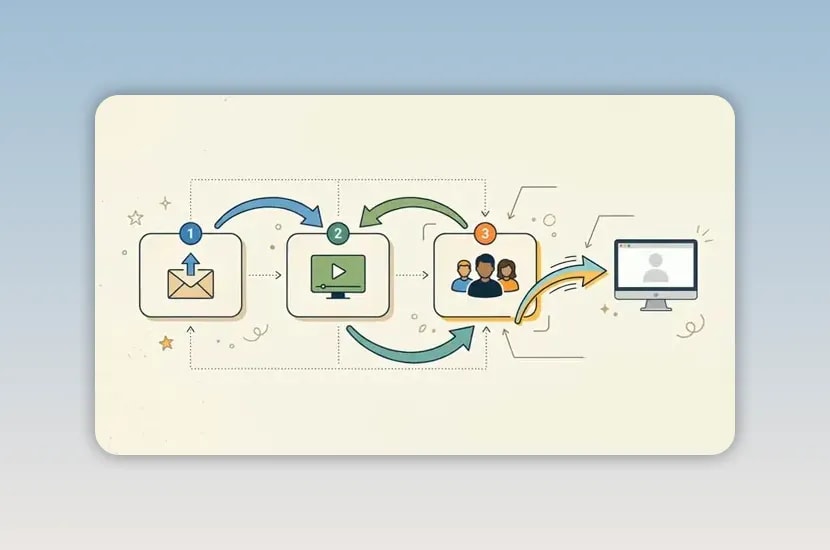
This does not mean no work is required. You still need to use the products, learn the process, follow directions, invite consistently, and follow up professionally. What changes is the amount of mental weight you carry.
You are no longer trying to keep every answer in your head. The tool handles the repeatable explanation. The team supports the detail. You can focus on the human part: making a genuine connection and being reliable.
Why tools make duplication possible
Duplication is not about making everyone copy your personality, your speaking style, or your personal story.
It is about giving people a process simple enough to repeat.
When a new team member joins, they do not need to master a forty-minute presentation before they can begin. They can learn the same three actions:
- Invite someone to look.
- Share the tool.
- Use the team for support.
That is the real advantage of a system. Your downline is not dependent on you repeating the same training ten times a day. The system becomes the consistent sponsor.
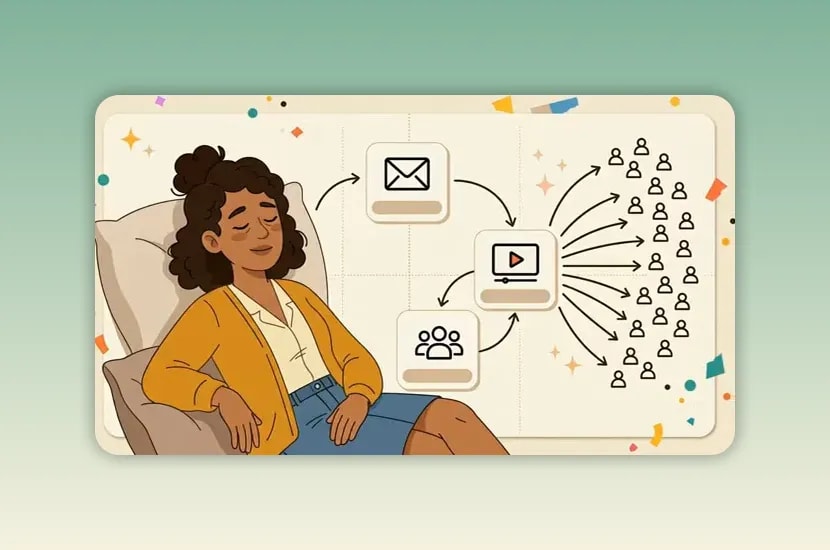
A personal conversation can only reach so many people in one day. A well-built video or website can present the same information repeatedly while you are teaching, grading papers, spending time with your children, or resting.
Life without the sales pitch
This is what “Own Your Life” looks like in practical terms: building around time, money, and health rather than sacrificing all three to a business that depends on constant persuasion.
Picture inviting a few people, sharing the tool, and allowing the system to teach while you get back to the responsibilities that matter most. You can be present with your kids. You can prepare for tomorrow’s class. You can take a breath without feeling like your business stops the second you step away from your phone.
When someone joins, they learn the same simple process. There is no need for late-night pressure messages, no need to chase friends, and no need to pretend that selling feels natural when it does not.
The emotional shift is as important as the practical one. You move from dreading the next conversation to knowing exactly what your role is. That clarity creates confidence, and confidence is far more sustainable than hype.
Start with a better system, not more hustle
If selling has been the part of network marketing that makes your stomach turn, do not assume you are the problem. You may simply need a process that removes the pressure to be the presenter.
Use the products. Learn the system. Invite people to take a look. Let the tool explain. Bring in the team when it is time for detail.
That is the ITT system in its simplest form: Invite, Tool, Team.
Individual results vary. Building any business requires effort, consistency, sound judgment, and a willingness to follow a proven process. No income outcome is guaranteed.

Ready to Unlock Your Ultimate Potential—and an Additional Income?
Sign up today to instantly receive the first four chapters of our Biohack Your Life™ to “Own Your Life” ebook for free!
True biohacking isn’t just about optimizing your body and mind; it’s about claiming total autonomy over your time and your finances. If you're ready to boost your daily energy, sharpen your focus, and discover how to build an additional income, it’s time to take control.