Skip to content


In network marketing, duplication means a team member can use a simple process, share it with someone else and help that person do the same. It is different from being an enthusiastic customer or making a few personal sales.
The challenge is not to persuade every person on your team to lead. It is to recognise who wants to build, who can work independently and who is willing to help others succeed. Three questions about past behaviour can make those conversations more useful.
What makes someone likely to duplicate?
A promising team builder needs more than confidence or a good sales pitch. Look for a combination of three behaviours:
- Self-direction: They keep working towards a goal without constant reminders.
- Coachability: They can follow a straightforward process and explain it to another person.
- Team-mindedness: They care about helping someone else make progress.
These are indicators, not a test that can predict anyone’s future with certainty. Randy Gage’s approach to network marketing leadership distinguishes potential leaders from people who prefer to participate in other ways. The often-cited estimate that 10 to 15% of a team may want to lead is best treated as a planning perspective, not a measured rule for every organisation.
That distinction matters. Customers, occasional referrers and part-time participants can all have a welcome place in a team. Pressuring them into leadership activities they did not choose may make participation less appealing, while giving everyone the same support can leave too little time for people actively trying to build.
The three questions to ask a potential team builder
Ask these as invitations to tell a story, not as a scripted interview. A specific example generally tells you more than a promise about what someone intends to do.
1. What have you kept doing for at least six months without anyone checking on you?
This explores intrinsic drive. The example does not have to be dramatic or business-related. It might be a household routine, a learning goal or a commitment they maintained alongside work.
Listen for what they decided to do, how they made time for it and what happened when the routine was interrupted. Someone who can describe returning to a goal after a setback is showing ownership. A vague answer is a reason to ask a follow-up question, not to label the person lazy.
2. When have you learnt a simple process and then shown someone else how to use it?
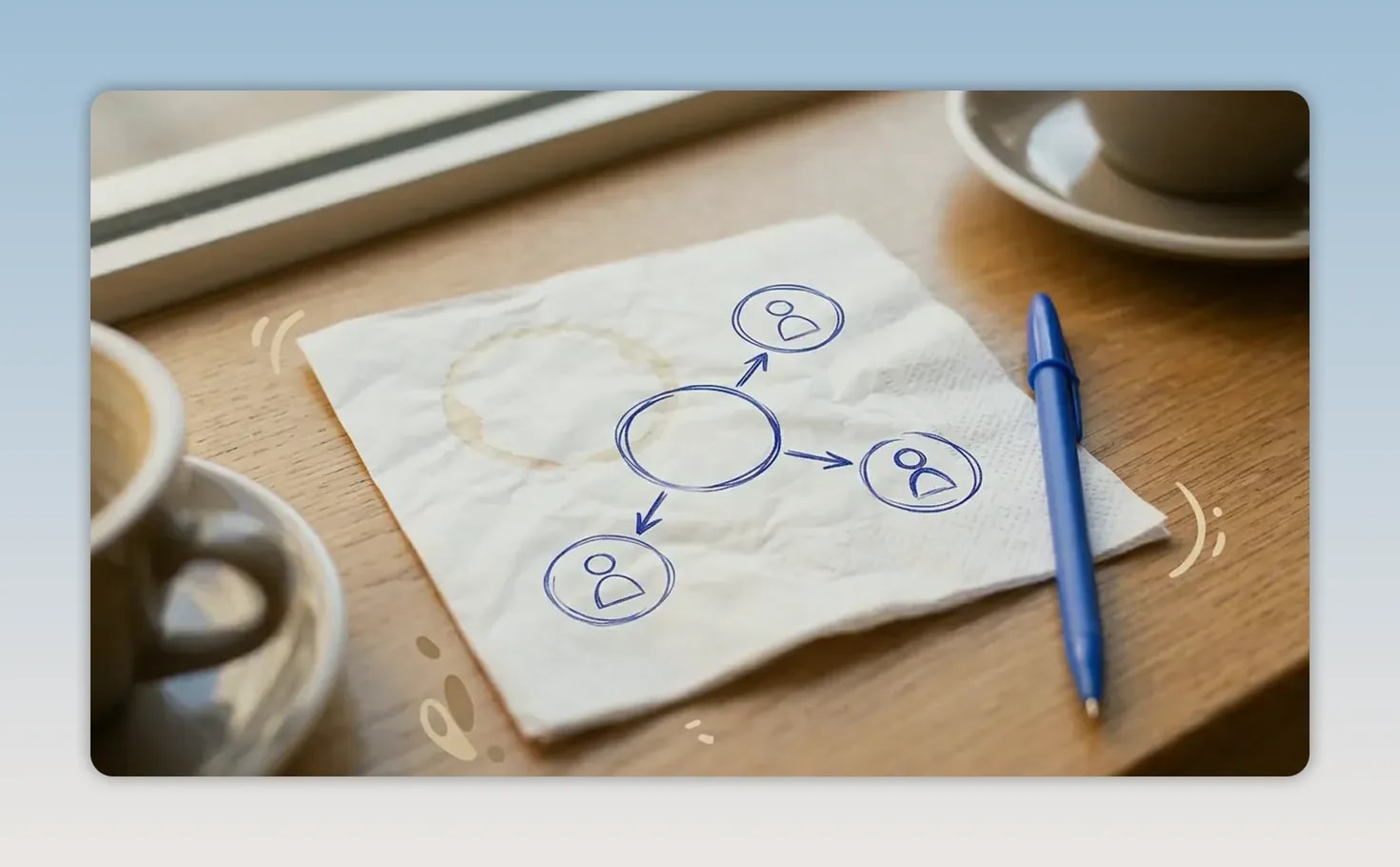
Duplication depends on a method another person can repeat. Don Failla’s napkin presentations illustrate the principle: a simple tool carries the explanation, rather than relying on one person to deliver an elaborate pitch each time.
A useful answer identifies the process, how the person learnt it and what they did to help someone else understand it. Teaching a child a routine, showing a colleague a workflow or helping a teammate practise a skill can all be relevant. You are looking for the ability to use and pass on a method, not a polished presentation.
3. When have you helped someone else succeed without a direct reward for yourself?
This explores team-minded leadership. Building a team means making space for other people’s progress, not just producing strong individual results.
Ask what the other person needed and what your potential builder actually did. Notice whether they can describe the other person’s achievement, rather than turning the account entirely towards their own contribution. Someone can be excellent at selling and still need to develop this side of leadership.
How to use the questions without making the conversation awkward
Bring up one question when it fits what the person is already discussing. A parent describing a busy home life might naturally talk about a routine that stuck. A coach might have an example of teaching a skill. A teacher might recall helping a pupil who was struggling.
Then listen across all three answers for:
- Specificity: Is there a real situation and a clear account of what happened?
- Ownership: Can they explain the choices they made, including how they dealt with setbacks?
- Interest in others: Can they speak meaningfully about another person’s progress?
A brief answer is not automatically a poor one. Someone may need time to think or may have more relevant experience outside paid work. Equally, an energetic story is not proof that they will build a team. Use the questions to understand the person, then pay attention to what they do next.
The conversation can happen in person, on the phone or by text. It is often helpful to have it before someone commits to building, so you can understand what level of participation they actually want.
What to do after the conversation
If someone wants to build and shows promising habits, connect them with your team’s simple tools and give them a chance to use the process. Notice whether they engage with the material, ask questions and follow through without repeated chasing. Support their confidence while allowing their actions to guide how much time you invest.
If someone prefers to be a customer or participate part-time, respect that choice. Offer support appropriate to what they want, rather than treating leadership as the only worthwhile outcome. Their interests may change later, but that decision is theirs to make.
This approach can be particularly useful when your time is limited. Instead of personally repeating every explanation or trying to motivate everyone in the same way, use a clear, repeatable tool and respond to the level of interest each person demonstrates.
Do You Want to Learn How To Earn an Additional Income?
Start Owning Your Life
Mistakes that make it harder to spot potential leaders
- Turning a conversation into an interrogation. Ask naturally and leave room for the person to ask questions too.
- Judging someone on a single answer. Look for a pattern across their examples and subsequent actions.
- Confusing enthusiasm with follow-through. Interest matters, but using the tools and taking the next step provide stronger practical signals.
- Confusing sales ability with duplication. A person may sell well yet be reluctant to teach a repeatable process.
- Treating non-builders as failures. People can value a product or community without wanting to lead.
- Presenting income as assured. Neither promising answers nor a simple system guarantees earnings. Anyone considering a network marketing opportunity should understand its costs and compensation structure. The US Federal Trade Commission’s guidance on MLM businesses and pyramid schemes offers useful questions to ask before joining.
A simple next step
Keep the three prompts in your notes: What have you sustained independently? What have you learnt and taught? Whom have you helped succeed? Use one when it fits your next conversation. Then listen carefully, share a repeatable tool if the person is interested and let their preferences and actions shape the support you offer.

Ready to Unlock Your Ultimate Potential—and an Additional Income?
Sign up today to instantly receive the first four chapters of our Biohack Your Life™ to “Own Your Life” ebook for free!
True biohacking isn’t just about optimizing your body and mind; it’s about claiming total autonomy over your time and your finances. If you're ready to boost your daily energy, sharpen your focus, and discover how to build an additional income, it’s time to take control.