Skip to content


To train a team that trains itself, teach people how to pass on a repeatable process, not just how to complete a task. Demonstrate the work, explain how to teach it, then let the next person take responsibility for the next handoff.
In network marketing, the three-level duplication method provides a way to check whether that transfer is happening. The aim is not simply to sponsor more people. It is to develop people who can help others learn without every conversation returning to you.
For busy parents, teachers and coaches building a business alongside existing commitments, that distinction matters. A growing team should not require you to personally deliver every presentation, answer every routine question and train every new member.
Key Takeaways
- Three levels deep means successive sponsorship relationships, not three people you personally recruit.
- Demonstrate the activity, explain how to teach it, then let the learner lead.
- Shared resources support duplication, but the real test is whether teaching transfers between people.
- Three-level duplication is a training benchmark, not a guarantee of income or independence.
What Does Three Levels Deep Mean?
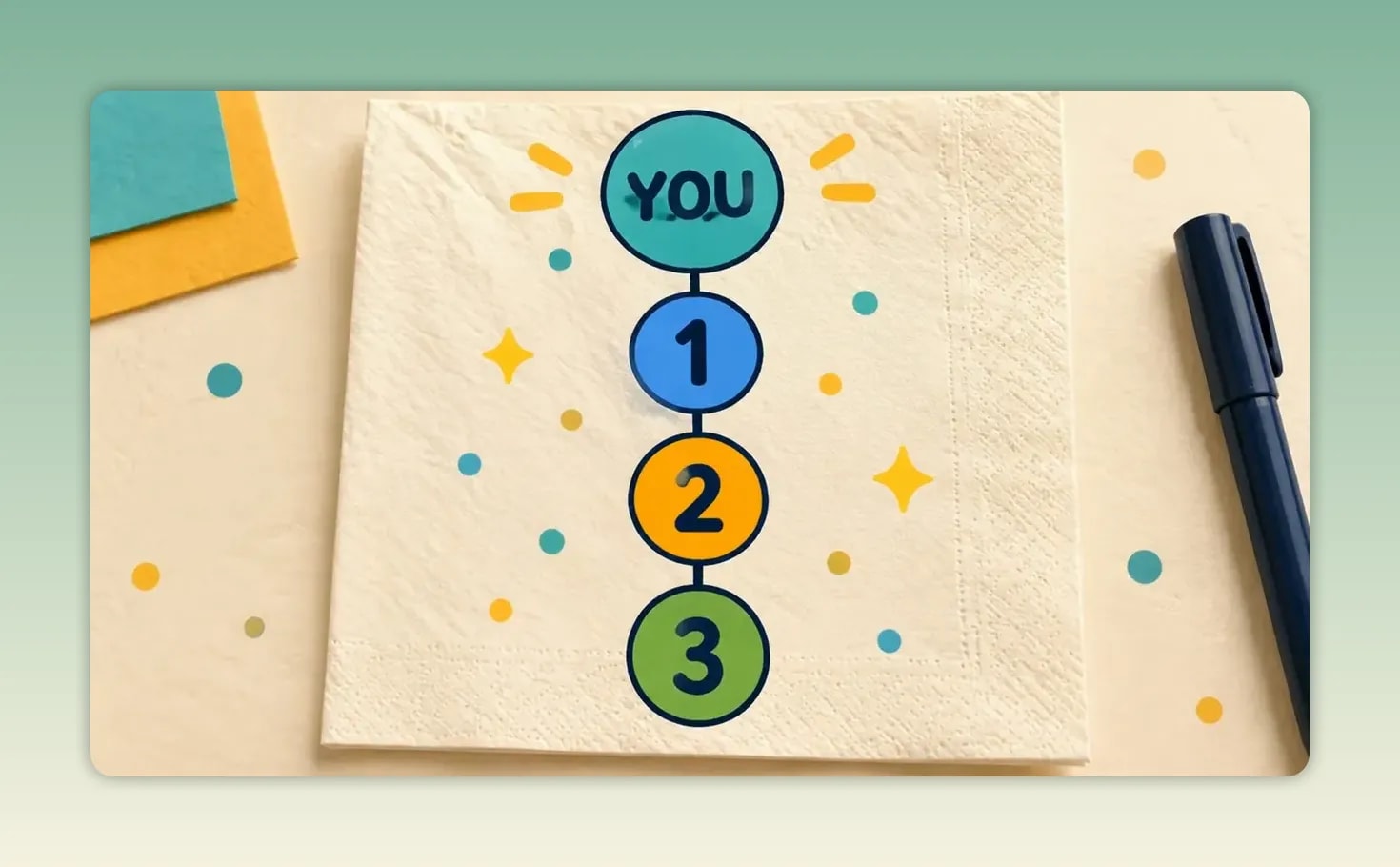
Don Failla, known for his napkin presentations, uses three levels of depth as a benchmark for duplication. Count three successive sponsorship relationships beneath you, rather than three people you have personally sponsored.
- Level one: A person you sponsor.
- Level two: A person your first-level team member sponsors.
- Level three: A person that second-level member sponsors.
For example, you sponsor Alex, Alex sponsors Sam, and Sam sponsors Jordan. There are four people in the chain, including you, with three levels beneath you.
Depth and breadth are different. Personally sponsoring three people creates three direct relationships at one level. It does not show that any of those people can teach the process to someone else.
The useful part of Failla’s principle is the teaching test behind it: can a skill move through successive people without depending on the original trainer? Three levels are a practical benchmark, not a magic number or a guarantee of business success.
Build the Handoff Before You Add More Training
A self-training team still needs teaching and support. What changes is where that capability sits. Instead of keeping all the knowledge with the original leader, each person learns both the activity and how to help the next person learn it.
The handoff approach associated with Eric Worre follows three moves: demonstrate, explain and step back. Applied to team training, it looks like this.
1. Demonstrate one core activity
Choose a specific activity the new person will need to repeat, such as using a short presentation or explaining a simple napkin drawing. Demonstrate it using the same resource they will have available.
The demonstration should make the process accessible. If it depends on your ability to improvise a long explanation, the learner may understand the message without knowing how to deliver it themselves.
2. Explain how to pass it on
After the demonstration, explain what you did and how the learner can repeat it with someone else. Keep the focus on the resource, the steps and the next handoff.
A useful training prompt is: “How would you help the next person use this same resource?” This shifts the assignment from remembering information to teaching a process.
For example, Alex’s task is not merely to understand your presentation. Alex needs to learn how to use it with Sam, then help Sam become capable of using it with Jordan.
3. Let the learner lead
Give the new person the opportunity to carry out the activity. Remain available for support, but avoid taking over simply because you could finish faster.
This is where the handoff becomes real. A person who only observes you has not yet demonstrated that they can do the work. A person who can perform the activity still needs an opportunity to teach it.
4. Check the next transfer
Follow the process beyond the first learner. Can Alex help Sam use the resource? Can Sam then help Jordan learn it without you becoming the main presenter again?
If the process stops, look for the point where responsibility stopped moving. The next step may be another demonstration or a clearer explanation of how to teach, rather than more personal recruiting.
Use Shared Tools Instead of Becoming the Answer to Everything
Failla’s approach centres on a brief presentation and simple napkin drawings. These provide a common message that another person can use without having to reproduce the original trainer’s personality or speaking style.
The principle is straightforward: make the process easier to repeat than to reinvent.
When choosing a training resource, ask:
- Can a new person understand its purpose?
- Can they use it without needing you to deliver the explanation?
- Can they show another person how to use it?
- Will the next person have access to the same resource?
When a routine question arises, help the learner find and understand the relevant material rather than always supplying a fresh answer from memory. You are teaching them where to turn and how to help someone else with the same question.
A resource does not remove the need for clear communication. Its role is to support a consistent explanation, not to replace understanding or promise that a business will require no selling effort.
Why Teams Become Dependent on One Leader
The dependency problem can begin with good intentions. You want new members to feel supported, so you handle the presentations, respond to every message and train each person personally.
Over time, the team learns to route the work back to you. Your availability becomes the limit on what can happen next.
That is a training-design problem worth examining before assuming that people lack motivation. Signs include:
- Routine questions always return to you, even when others have already encountered them.
- Presentations wait for your availability because nobody else feels ready to lead.
- New members depend on you for training, regardless of who sponsored them.
- Activity slows when you step back because responsibility has not transferred.
The solution is not to become less helpful. It is to make your help develop someone else’s ability to act and teach.
Common Mistakes That Prevent Duplication
Doing the work because it is quicker
Taking over may save time during one conversation, but it removes the learner’s chance to practise. Repeated often enough, that shortcut keeps the team dependent on you.
Support the attempt, clarify what was missed and let the learner retain responsibility.
Confusing recruitment with training depth
A chain of sponsored people does not, by itself, establish that teaching has transferred. If you still conduct every presentation and train everyone personally, the structure may have depth while the training remains centralised.
Look for evidence of people teaching the next person, not only names at successive levels.
Teaching a task but not how to teach it
Someone may be able to use a presentation without being able to help another person learn it. Make passing on the skill an explicit part of the training assignment.
This reflects the leadership principle associated with Randy Gage: developing people into leaders matters more than keeping every responsibility for yourself.
Stepping away before the handoff works
Reducing dependency is not the same as withdrawing support. Step back from doing the work while checking whether the learner can perform it and pass it on.
Reaching three levels does not mean you can permanently disengage. It means you have a useful opportunity to assess whether the process is becoming repeatable.
Treating the method as an income promise
Three-level duplication is a training structure, not a forecast of earnings or a promise of overnight income. Business results vary and require effort and consistency.
Before joining any network marketing opportunity, assess the business separately from its training method. The FTC’s consumer guidance on multi-level marketing offers additional context for that decision.
A Practical Starting Point for Your Next Training Session
Start with one person and one repeatable activity. You do not need to redesign every part of your team’s training at once.
- Select the shared resource you want the learner to use.
- Demonstrate the activity without adding unnecessary complexity.
- Explain the teaching responsibility, including how to help the next person learn.
- Let the learner lead while you provide support rather than take over.
- Check the next handoff to see whether the process continues without you at its centre.
The first four chapters of Biohack Your Life are available free as an introductory resource for exploring the approach.
The goal is not to become better at training everyone yourself. It is to help each person become capable of teaching the next. Start by checking one handoff, then follow the learning through the next three levels.

Ready to Unlock Your Ultimate Potential—and an Additional Income?
Sign up today to instantly receive the first four chapters of our Biohack Your Life™ to “Own Your Life” ebook for free!
True biohacking isn’t just about optimizing your body and mind; it’s about claiming total autonomy over your time and your finances. If you're ready to boost your daily energy, sharpen your focus, and discover how to build an additional income, it’s time to take control.