Skip to content


A network marketing team becomes more repeatable when new members can share the same clear explanation without needing to perform like an experienced leader. The aim is not to create better speeches. It is to create a process that another person can learn, use and pass on.
The 45-second napkin presentation combines a simple drawing with a brief explanation. The wider Invite, Tool, Team framework gives that explanation a practical route from one person to the next.
The timing needs context: 45 seconds refers to the introductory presentation, not the time required to build a team, earn income or establish a business. Those outcomes require ongoing work and are not guaranteed.
Key Takeaways
- The 45-second target applies to the introductory explanation, not team growth or earnings.
- The napkin drawing makes a basic idea easier for another person to explain and share.
- Invite, Tool, Team separates introductions, consistent information and experienced support into manageable roles.
- Duplication requires ongoing effort and does not guarantee business success or income.
- Key Takeaways
- What Is the Napkin System in Network Marketing?
- How the 45-Second Napkin Presentation Works
- Give the Presentation a Process: Invite, Tool, Team
- Why Teams Become Dependent on One Leader
- How to Start Using the Napkin System
- Common Mistakes and Important Limits
- Start by Making One Step Easier to Pass On
What Is the Napkin System in Network Marketing?
The napkin system is a visual teaching approach associated with Don Failla, whose network marketing career began in 1967. Instead of asking a new member to remember a lengthy business explanation, it gives them a drawing and a short explanation they can reproduce.
Its central principle is duplication: transferring a usable process, rather than relying on one person’s confidence, charisma or knowledge.
A successful introduction therefore has two jobs:
- Help someone understand the basic idea.
- Make the explanation simple enough for that person to share accurately with someone else.
This makes the approach particularly relevant to beginners who feel uncomfortable presenting, answering unfamiliar questions or speaking at length. It reduces what they must do at the start without removing their responsibility to learn the business.
How the 45-Second Napkin Presentation Works
The introductory drawing uses two circles joined by an arrow. Each element carries one part of the explanation.
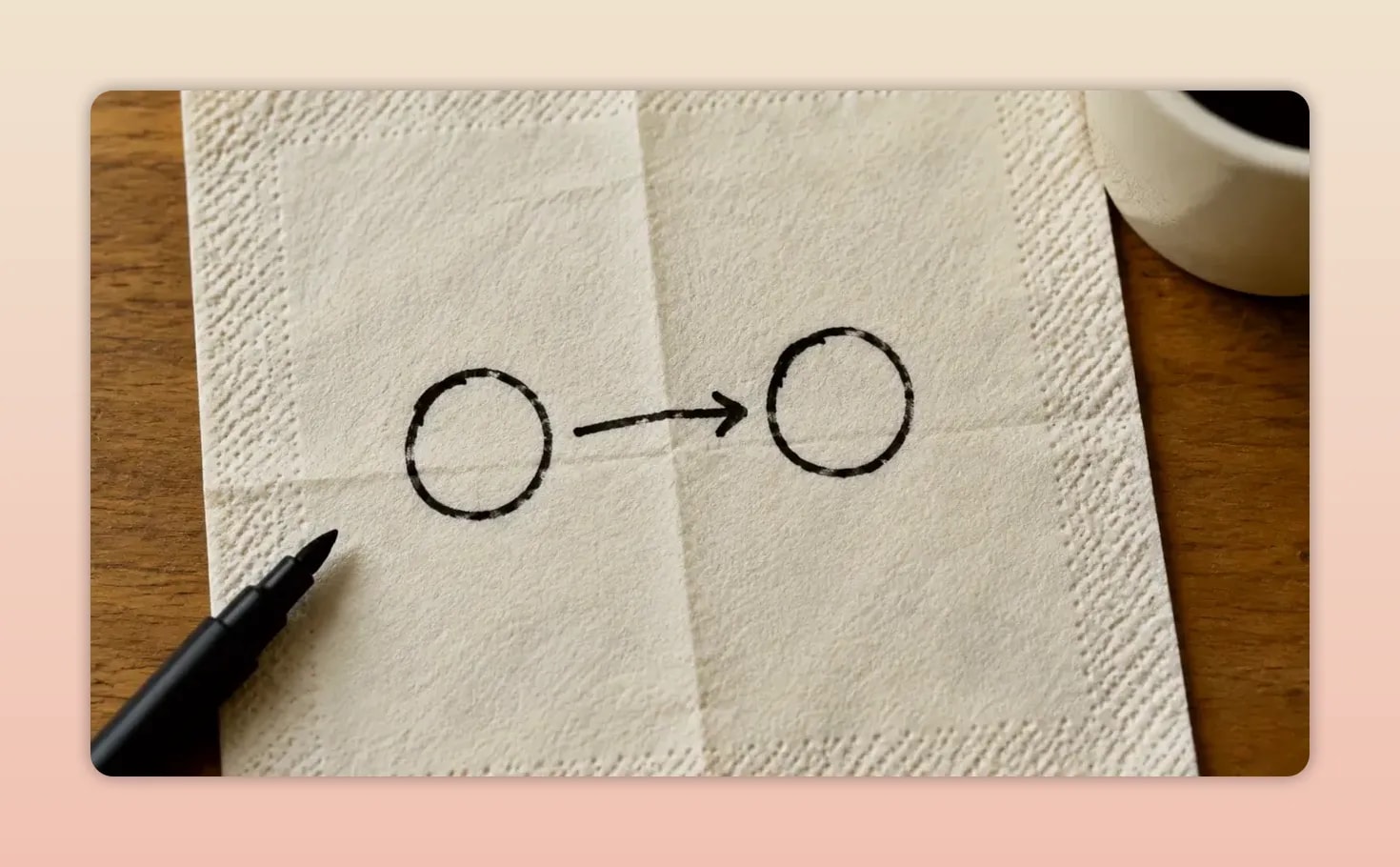
The first circle: income linked to your own working time
The first circle represents the familiar arrangement of exchanging working time for pay. Its purpose is to introduce the relationship between personal effort and income, not to describe every type of employment or pay arrangement.
The second circle: a business involving a wider network
The second circle represents a network in which business activity involves more people than the individual who introduced it. The intended contrast is between doing everything personally and helping others use a shared process.
This is a conceptual illustration, not evidence that joining a network produces continuing income. Any earnings depend on the actual business, its compensation arrangements and the work performed.
The arrow: teaching a process that can be passed on
The arrow represents duplication. It connects the idea of individual activity with a process that other people can also use.
The key question is not whether the drawing looks impressive. It is whether a beginner can explain its meaning and help the next person do the same.
An example of a short explanation
The following is an illustrative explanation, not a prescribed script:
This circle represents work tied mainly to your own time. This one represents a business involving a wider network. The connection is a simple process that other people can learn and share. The first step is to understand that process, rather than become an expert presenter. Would you like to review a short introduction?
Use roughly 45 seconds as a brevity target. Do not rush to hit an exact time or treat that duration as a universal rule. The purpose is to introduce one idea clearly, then offer a suitable next step.
Give the Presentation a Process: Invite, Tool, Team
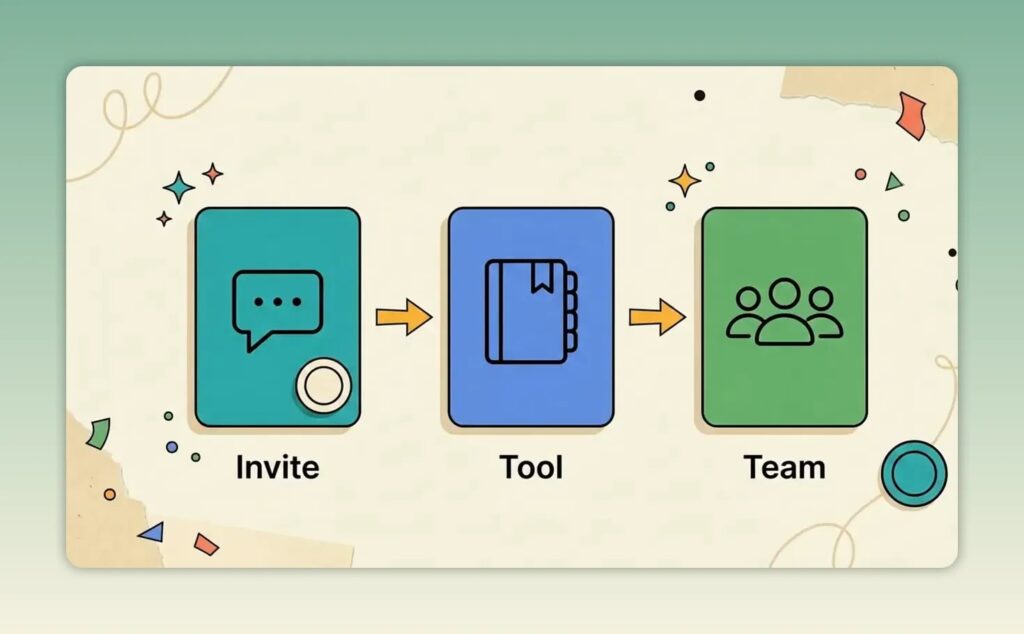
A drawing cannot organise follow-up, provide detailed answers or support a new member by itself. The Invite, Tool, Team framework, often shortened to I.T.T., separates those responsibilities into manageable roles.
Invite: open a conversation without delivering the whole presentation
The inviter’s immediate role is to offer someone an opportunity to review information. They do not need to explain the entire business or answer every possible question before sharing the introductory resource.
A simple invitation might be:
Would you be interested in reading a short introduction to the network marketing approach I’m learning?
Keep the invitation clear about its purpose. A low-pressure approach should still allow the other person to understand what they are being invited to consider.
Tool: use a consistent resource to explain the basics
The tool carries the core explanation so that each person does not have to reconstruct it from memory. In this approach, the introductory resources include a free download of the first four ebook chapters and a public teaching library.
The benefit is consistency. Different members can share the same information even when their experience and presentation styles differ.
The short napkin explanation introduces the idea. The supporting resource gives someone more information to consider. Neither needs to carry the entire conversation alone.
Team: provide experienced support for questions
The sponsor and more experienced team members provide support when questions require knowledge beyond the beginner’s introduction. Webinars and individual online meetings offer ways to continue that discussion.
This separates knowing how to introduce the business from knowing how to answer detailed questions. A new member can learn the first skill while developing the second over time.
The distinction matters, however: team support should build capability, not make one leader permanently responsible for every conversation.
Why Teams Become Dependent on One Leader
A strong presenter may attract interest yet unintentionally set a standard that beginners find impossible to copy. If new members believe they need the same personality, fluency or experience before they can act, they may hesitate to start.
Long explanations create another problem. Each person remembers different details, changes the wording and leaves something out. As the explanation passes between people, the message can become less consistent.
These are process problems worth checking before assuming a team lacks motivation.
- Presentation dependency: members wait for the leader to explain the opportunity.
- Knowledge dependency: members think they must know every answer before inviting someone.
- Message drift: each person develops a different version of the business explanation.
- Meeting dependency: progress stalls whenever one organiser is unavailable.
A shared tool and a clear support route are intended to reduce these obstacles. They do not eliminate the need for leadership, practice or judgement.
How to Start Using the Napkin System
Begin with a small learning loop rather than a large training programme.
- Study the introductory material. Failla’s wider approach includes ten napkin presentations, with the first four positioned as the foundation for understanding network marketing and addressing major objections.
- Learn one explanation first. Practise the two-circle drawing until you can reproduce it and explain the arrow without a lengthy detour.
- Identify the shared tool. Know which introductory resource to offer so new members are not choosing between competing explanations.
- Make the support route clear. Explain who can help with detailed questions and how to access the relevant meeting or discussion.
- Teach the next person to repeat the process. Ask them to draw, explain, invite and locate support, rather than simply confirm that they understand.
The useful test is a handover: can the next person use the process with someone else without you taking over? If not, identify the specific difficulty. They may need help with the drawing, the invitation, the resource or the follow-up route.
Keep the wider business activities in view
The presentation sits alongside four broad activities in Failla’s approach: getting started, using the products, increasing activity and sharing with friends.
These activities underline an important boundary. Learning a short presentation is only one part of participating in the business. Sharing a resource does not replace product understanding, consistent effort or responsible follow-up.
Common Mistakes and Important Limits
Turning a short introduction into a complete business pitch
Adding every detail defeats the purpose of a simple teaching tool. Introduce the core idea, then use the supporting material and an appropriate discussion for the detail.
Equally, brevity must not become an excuse to leave important questions unanswered before someone makes a decision.
Confusing consistency with a ban on questions
A shared resource provides a common starting point. It should not discourage questions or substitute for accurate answers. If a beginner does not know an answer, seeking experienced help is better than improvising.
Replacing leader dependency with upline dependency
Experienced support is useful when it helps members learn. It is less useful if every routine action still requires someone senior to step in. Keep teaching the repeatable parts while making specialist support available where needed.
Assuming duplication guarantees income
A repeatable communication process is not a guarantee of profit, passive income or team growth. The business still requires effort and consistency, and individual results vary.
Before joining any network marketing opportunity, review the business separately from the quality of its presentation. The US Federal Trade Commission’s guidance on multi-level marketing businesses and pyramid schemes provides useful questions for evaluating an opportunity.
Start by Making One Step Easier to Pass On
The practical value of the napkin system is its narrow starting point: a simple visual explanation, a consistent resource and a clear route to support.
Learn the introduction, practise it with the next person and check whether they can pass it on accurately. That is a more useful first milestone than delivering an impressive presentation yourself.
A team does not duplicate merely because its leader explains more. The aim is to help each member take a manageable next step, then teach someone else to take that same step responsibly.

Ready to Unlock Your Ultimate Potential—and an Additional Income?
Sign up today to instantly receive the first four chapters of our Biohack Your Life™ to “Own Your Life” ebook for free!
True biohacking isn’t just about optimizing your body and mind; it’s about claiming total autonomy over your time and your finances. If you're ready to boost your daily energy, sharpen your focus, and discover how to build an additional income, it’s time to take control.