Skip to content


If your downline only makes progress when you explain, present, remind and follow up personally, your team may have a process problem rather than an effort problem. A method can produce results for an experienced leader while remaining difficult for anyone else to repeat.
Downline duplication means helping team members repeat a clear process without depending on your personality, sales ability or constant availability. The aim is not to turn everyone into a copy of you. It is to make the next useful action understandable and achievable.
Four mistakes commonly stand in the way: leader-dependent methods, pressure-based invitations, inconsistent onboarding and recognition that only rewards results. Each has a small corrective action you can begin in about five minutes. Building and testing the full system takes longer.
Key Takeaways
- Duplication depends on a clear process that new members can use without constant leader involvement.
- Consistent onboarding should include practice and demonstrated ability, not just attendance at training.
- Brief, permission-based invitations reduce dependence on personal persuasion and leave room for genuine choice.
- Recognise useful activity while respecting each member’s goals and chosen level of involvement.
- Key Takeaways
- What Does Duplication Mean in Network Marketing?
- Mistake 1: Treating Onboarding as Attendance Instead of Ability
- Mistake 2: Building a Method That Only the Leader Can Run
- Mistake 3: Teaching People to Persuade Instead of Invite
- Mistake 4: Expecting Everyone to Match Your Ambition
- How to Test Whether Your Duplication System Is Usable
- Start With One Five-Minute Change
What Does Duplication Mean in Network Marketing?
In network marketing, a downline is the network of participants connected through sponsoring relationships. Duplication is the transfer of a repeatable way of working through that network.
It is different from personal productivity. You might be excellent at explaining a product, answering objections or making presentations. Those skills do not automatically become something a new member can use after work on a busy weekday.
A duplicable process answers three questions:
- What do I do next? The action is specific rather than a vague instruction to build the business.
- What do I use? A suitable tool or checklist supports the action.
- How do I know I can do it? Practice checks understanding rather than simply recording attendance.
Randy Gage’s distinction between a task-focused grinder and a system-building leader captures the underlying issue: being indispensable can become a limitation. If every decision and conversation passes through you, your availability sets the team’s pace.
A quick diagnostic for your team
Before adding another training call, ask:
- Could a new member find the invitation and follow-up steps without contacting you?
- Does every new member receive the same basic orientation?
- Can someone demonstrate a task after training, rather than merely describe the session?
- Can a person decline an invitation without being pressured?
- Do part-time members receive support that fits their goals?
- Is useful activity recognised before a sale or enrolment happens?
Use the first unclear answer to choose where to start.
Mistake 1: Treating Onboarding as Attendance Instead of Ability
A new member can attend several calls and still not know how to send an invitation, explain pricing or find the right presentation. Receiving information is not the same as being able to use it.
The opposite problem is equally demanding: repeating every explanation live for every person. At eight to fifteen hours of individual training per recruit, even a handful of new members can occupy dozens of hours. That approach makes the leader a scheduling bottleneck.
The correction is a consistent start, followed by a simple demonstration of ability. Give particular attention to the first 48 hours and use the first two weeks to help the person understand and practise the essentials.
The five-minute fix: draft a four-step first-week checklist
- Welcome. Explain where to begin, where the core resources are and what the first week involves.
- Learn. Introduce the basic presentation and the invitation process without overwhelming the person with advanced material.
- Connect. Make sure they know who can help with questions that the resources do not answer.
- Practise. Ask them to rehearse an invitation, locate a resource or handle a basic pricing question.
This first draft does not need elaborate technology. A short welcome recording, a one-page checklist and a couple of automatic reminders can carry the repeatable information.
Keep live support for the parts that benefit from a conversation: uncertainty, feedback, individual questions and encouragement.
Check competence with a small task
Replace “Have you completed the training?” with a practical request such as:
- “Show me where you would find the presentation link.”
- “Talk me through how you would ask permission to share it.”
- “Where would you check the current price?”
The point is to discover what needs clarification, not to create a high-pressure assessment. Preparation gives a new member an early sense of progress before any business outcome appears.
Mistake 2: Building a Method That Only the Leader Can Run
A collection of scripts, objection responses, rank plans and personalised explanations can look like a complete system. For a beginner, it may look like too many choices.
The key distinction is between something that works when you do it and something another person can repeat. A persuasive conversation may achieve the first without teaching the second.
Documentation helps only when it makes the next action clearer. A large resource library is not a substitute for a simple route through it.
The five-minute fix: put the core workflow on one page
Write down how someone moves from an initial invitation to their next appropriate step. Beside each action, name the resource that supports it.
A simple outline might include:
- Ask whether the person is interested in receiving information.
- Share the agreed introductory resource if they consent.
- Ask what questions they have and whether they want more detail.
- Offer the next relevant presentation or team conversation if requested.
- Provide the standard orientation if they decide to join.
Use one page as a design constraint for the core route, not as a reason to omit essential information. Supporting resources can hold the detail. The page should show where to go, rather than attempt to teach everything at once.
The six components of a duplicable system
Gage’s framework identifies six supporting components:
- A broadly usable prospecting tool: an introductory resource that team members can share consistently.
- A one-to-one presentation tool: a short explainer that reduces dependence on an improvised pitch.
- A standard core presentation: a consistent explanation rather than a different account from every member.
- A standard orientation: the same essential starting information for each new participant.
- A repeatable event format: a familiar structure for presentations or team sessions.
- A staged progression: a clear next step, supported by a suitable tool at each stage.
The last component connects the others. Sometimes called an escalation progression, it means the process has a sequence rather than a pile of disconnected resources.
Progression should follow the person’s interest, not override it. The next resource is available when it is relevant. Someone who does not want to continue should not be pushed through the sequence.
Mistake 3: Teaching People to Persuade Instead of Invite
If joining requires a long, skilful sales conversation, a new member may assume that building the business requires the same performance. Someone who dislikes pitching can leave that conversation interested in the opportunity but doubtful about their ability to participate.
A simpler approach separates the invitation from the explanation. The member asks permission to share information. A standard tool handles the repeatable explanation. Further support is available for questions.
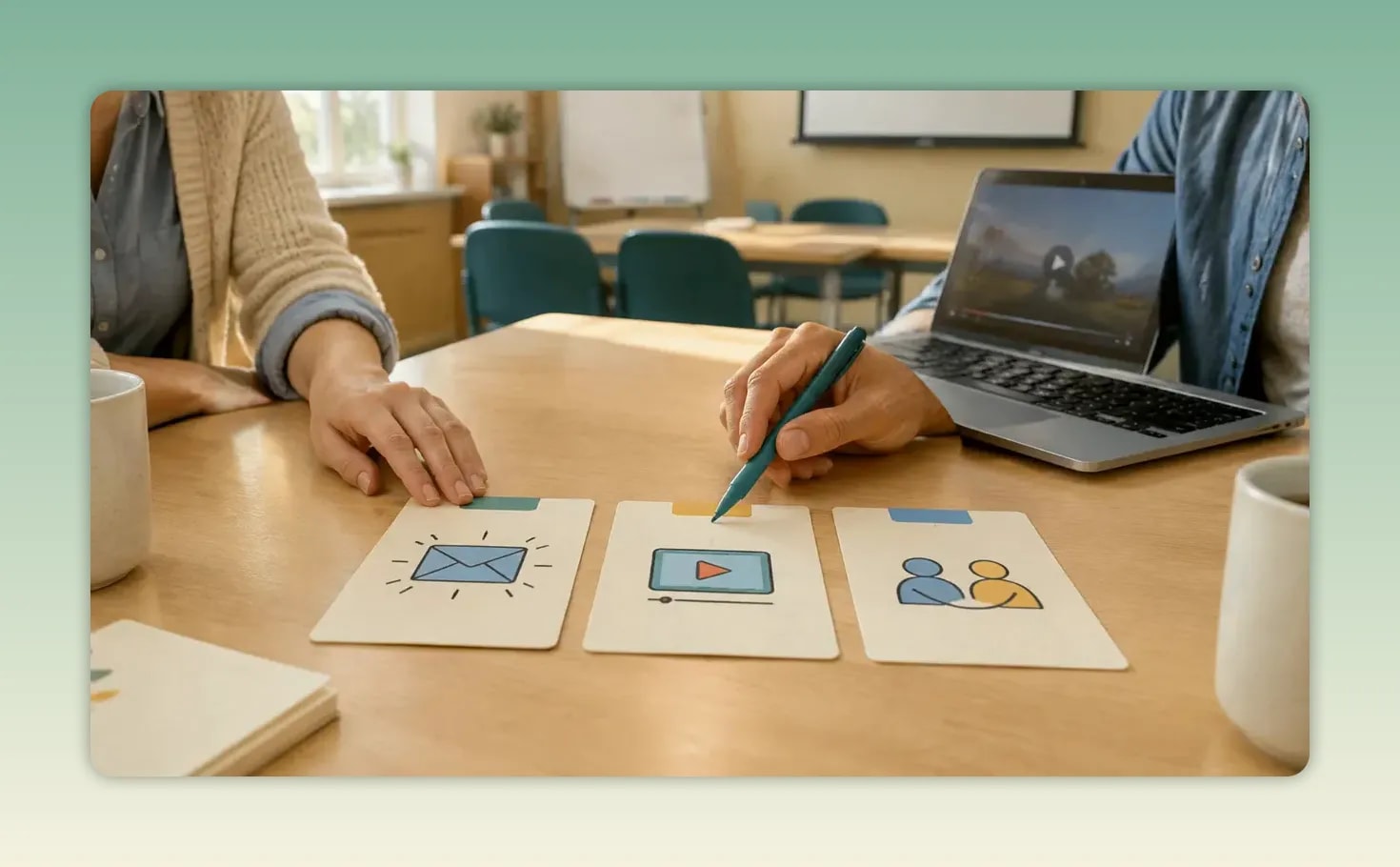
This is the principle behind the Invite, Tool, Team framework, or I.T.T., used in Biohack Biz onboarding:
- Invite: make a brief, clear invitation without pressure.
- Tool: share the relevant explanatory resource.
- Team: connect the interested person with support for the next stage.
The five-minute fix: write a short permission-based invitation
Aim for an invitation that takes no more than about 45 seconds to deliver naturally. It should identify the subject, offer a resource and leave room for a genuine no.
For example:
“I’m exploring a direct-selling business and thought you might be interested in learning about it. Would you like me to send a short overview? You can decide whether it is relevant to you, and it is completely fine if it isn’t.”
This is a starting example, not wording everyone must recite. The repeatable elements matter more than identical phrasing:
- Be clear about what you are introducing.
- Ask permission before sending the resource.
- Avoid income promises and exaggerated expectations.
- Let the person decide whether to continue.
Use responses to guide the next step
Someone who asks for more detail needs a different next step from someone who declines. The process should help you respond appropriately, rather than treat every response as an objection to overcome.
Keeping the invitation short does not mean concealing what the business involves. It means avoiding an unnecessary lecture before the person has chosen to learn more.
Reducing pressure is not the same as removing selling from a direct-selling business. A shareable tool can reduce reliance on presentation skills, but it does not remove the need for accurate information or guarantee income. For additional consumer context, consult the FTC’s guidance on multi-level marketing businesses and pyramid schemes.
Mistake 4: Expecting Everyone to Match Your Ambition
Not everyone wants to build at the same pace. Some people primarily want to be customers. Others want a very part-time activity. Treating every person as an aspiring full-time leader creates a mismatch between their intentions and your expectations.
A second mismatch appears when recognition only follows sales, enrolments or rank advancement. A beginner may be learning and taking useful action without yet producing those results.
Support the person’s chosen level of involvement and recognise controllable actions. That does not make outcomes irrelevant. It gives people feedback while those outcomes are still uncertain.
The five-minute fix: choose one activity to recognise this week
Select one practical behaviour and tell the team what you will acknowledge. Examples include:
- Completing a first invitation.
- Practising the invitation with a teammate.
- Starting a first meaningful conversation.
- Demonstrating a basic task after orientation.
Make the acknowledgement specific. “You practised the invitation and asked permission before sharing the resource” tells someone what they did well. General praise gives less direction.
In check-ins, ask about actions and learning as well as results: What did they try? What felt unclear? What support would help with the next step?
Avoid turning recognition into another pressure system
Activity recognition should not become a competition that assumes everyone has identical time, confidence or goals. Agree on an appropriate next action with the individual.
The leadership shift is from being the person who performs everything to helping others become capable. Sometimes that means coaching a task. Sometimes it means respecting a smaller commitment.
How to Test Whether Your Duplication System Is Usable
Do not judge the process only by how clear it looks to its creator. Give the one-page workflow to a new member and ask them to work through it.
Look for four practical signs:
- Findability: they can locate the right resource without asking you for the link.
- Clarity: they understand the next action without a lengthy explanation.
- Ability: they can demonstrate the basic task after preparation.
- Choice: the process respects both their goals and the other person’s response.
When someone gets stuck, improve that step before adding more training material. If the invitation is unclear, simplify it. If resources are hard to find, make the route easier to follow. If a task remains difficult, add practice rather than another attendance requirement.
Start With One Five-Minute Change
Choose the correction that addresses your team’s clearest point of friction:
- New members feel lost: draft the welcome, learn, connect and practise checklist.
- Everything depends on you: write the core workflow on one page.
- People feel uncomfortable pitching: create a brief, transparent invitation linked to a standard resource.
- Effort goes unnoticed: recognise one useful activity that fits the person’s goals.
Then test the change with one person. The useful question is not whether your process looks impressive, but whether someone else can understand it, use it and take an appropriate next step without you directing every move.
A repeatable system supports the work; it does not guarantee the outcome. Results still depend on effort, consistency, experience and individual circumstances.

Ready to Unlock Your Ultimate Potential—and an Additional Income?
Sign up today to instantly receive the first four chapters of our Biohack Your Life™ to “Own Your Life” ebook for free!
True biohacking isn’t just about optimizing your body and mind; it’s about claiming total autonomy over your time and your finances. If you're ready to boost your daily energy, sharpen your focus, and discover how to build an additional income, it’s time to take control.